

For large-scale leafy greens production, precision, productivity, and reliable support are essential. One family farm in the Desert Southwest is acting proof to how Ecorobotix’s ARA Ultra-High Precision sprayer can help meet those demands.
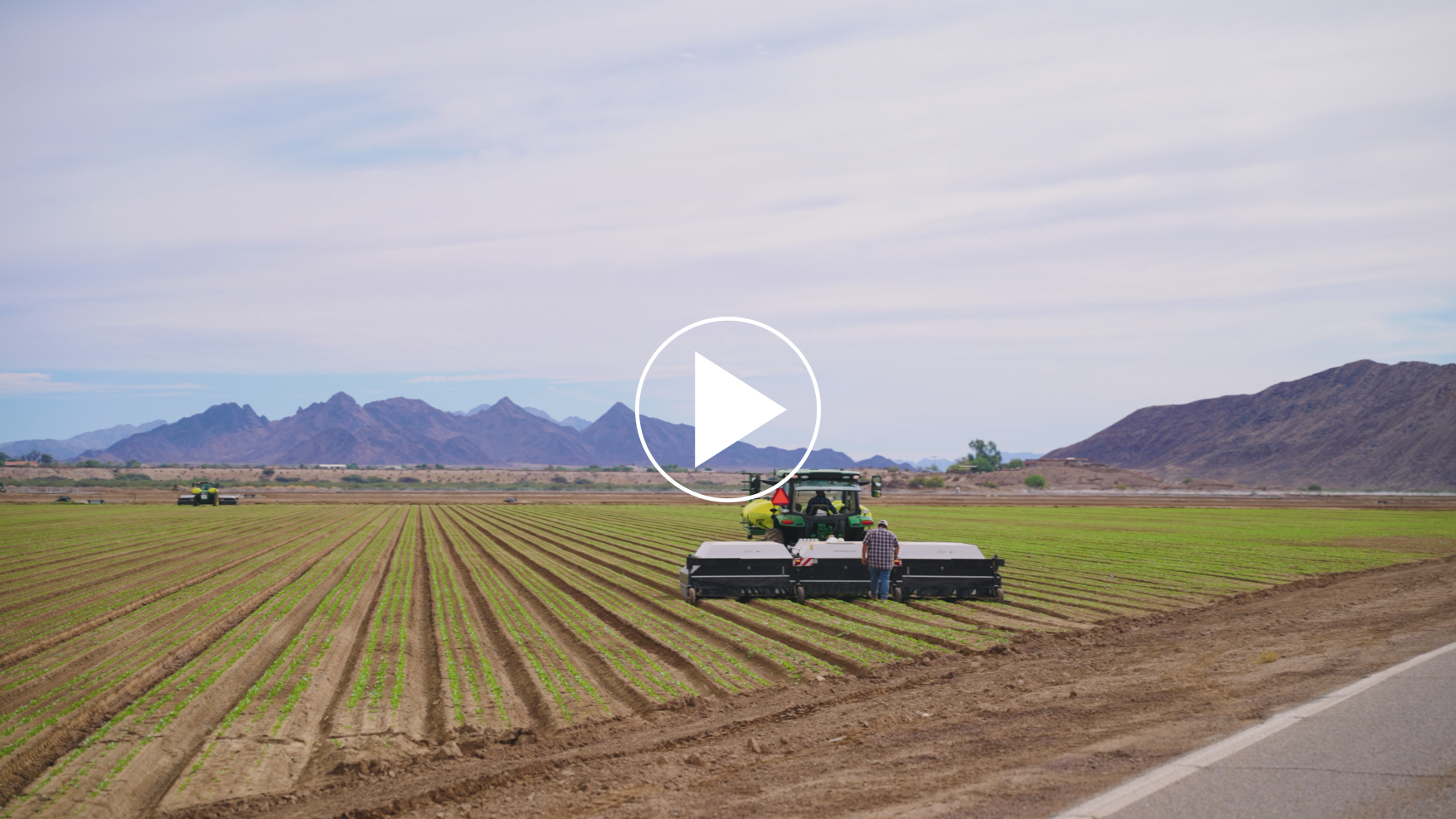
For leafy greens growers, weed control is a race against time. Large acreages, changing weed pressure, and tight operational windows leave little room for delays. Finding a solution that combines effective thinning and weeding with consistent field productivity is increasingly important. For David Nickerson, a grower on his family farm in the Desert Southwest, cultivating approximately 6,000 acres of leafy greens, Ecorobotix’s ARA precision sprayer offers a promising way to address these challenges.
Working alongside Keithly-Williams Seeds, an agricultural equipment & seed dealer serving the western United States, Nickerson has been evaluating how ARA fits into his operation. His experience highlights three priorities for modern lettuce production: maintaining ground speed, adapting field practices to precision technology, and having the right support when it matters most.
Maintaining Ground Speed When Field Conditions Change
One of the biggest advantages Nickerson sees in ARA is its ability to maintain a consistent working speed across different field conditions.
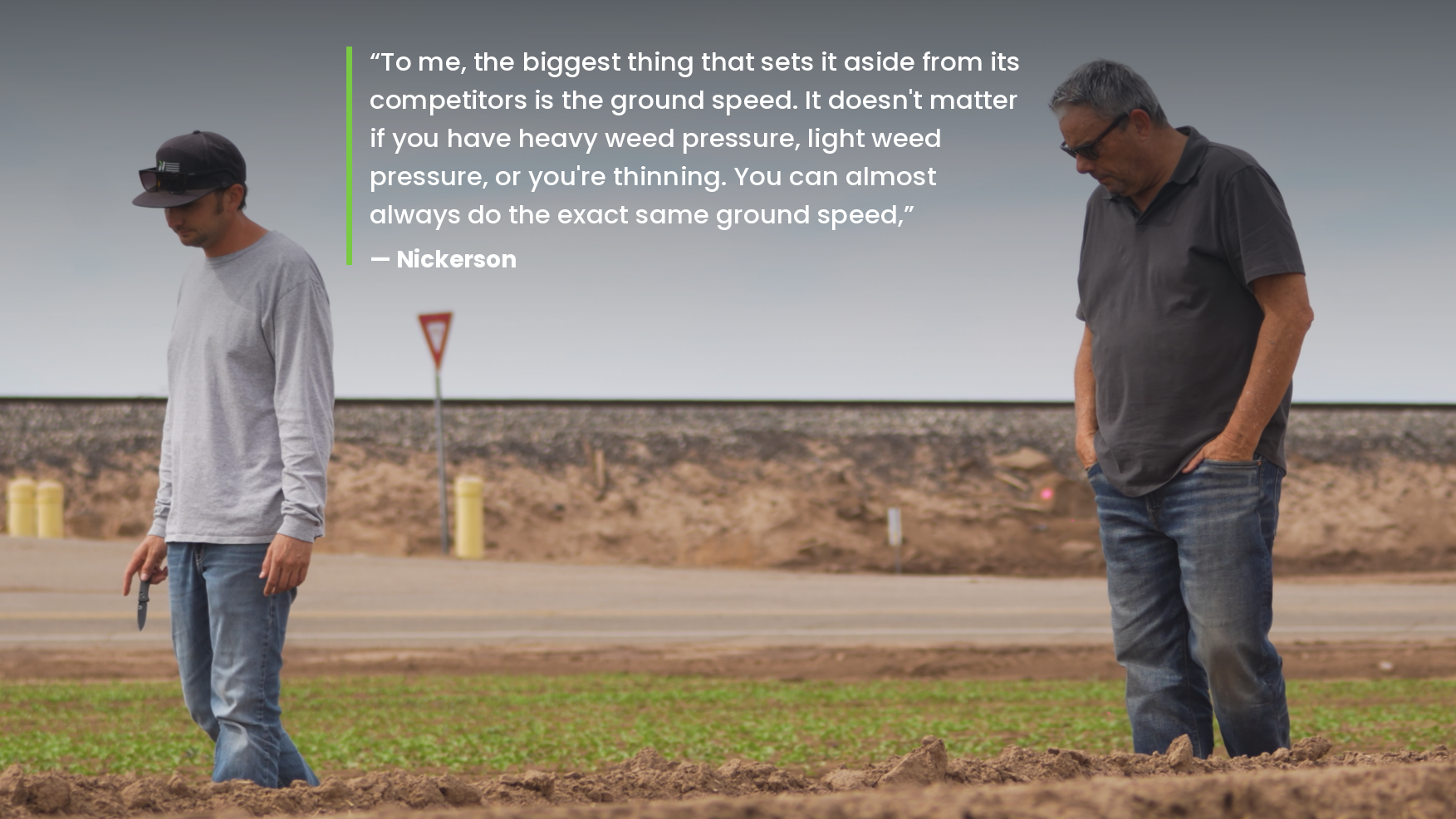
“To me, the biggest thing that sets it aside from its competitors is the ground speed. It doesn't matter if you have heavy weed pressure, light weed pressure, or you're thinning. You can almost always do the exact same ground speed,” Nickerson explains.
For a large-scale leafy greens operation, consistency in the field can make a meaningful difference. When weed pressure changes, growers need equipment that can keep pace with their operational demands rather than forcing them to slow down. Nickerson also explains that heavier weed pressure may require adjustments to the amount of product applied, but he values the machine’s ability to maintain its speed.
“You use a little bit more chemical if you have heavy weed pressure, but nothing slows the machine down, and that's what I love about it.”
For growers managing large acreages, this consistency can help make field operations more predictable across changing conditions.
Precision Technology Requires a Different Approach
Adopting new technology also means being prepared to adapt existing practices. Nick Copass, Sales Manager at Keithly-Williams Seeds, explains that ARA met the needs of Nickerson and many other customers by helping lettuce growers thin and weed their fields more quickly and at a reduced cost.
As Nickerson explains, adopting the technology initially required some consideration.
“When we were first introduced to the ARA, we were a little skeptical at first, but once we continued to see it run, saw other growers starting to implement it, I really started thinking about the ARA and how it's going to be as good as the grower makes it.”
Nickerson also highlights the importance of adapting planting practices to get the most out of the machine.
“You do have to change how you plant to be able to thin. You do have to change some parts of your operation, but they kind of give you the free will to do whatever you want with the machine, and the company backs and supports you.”
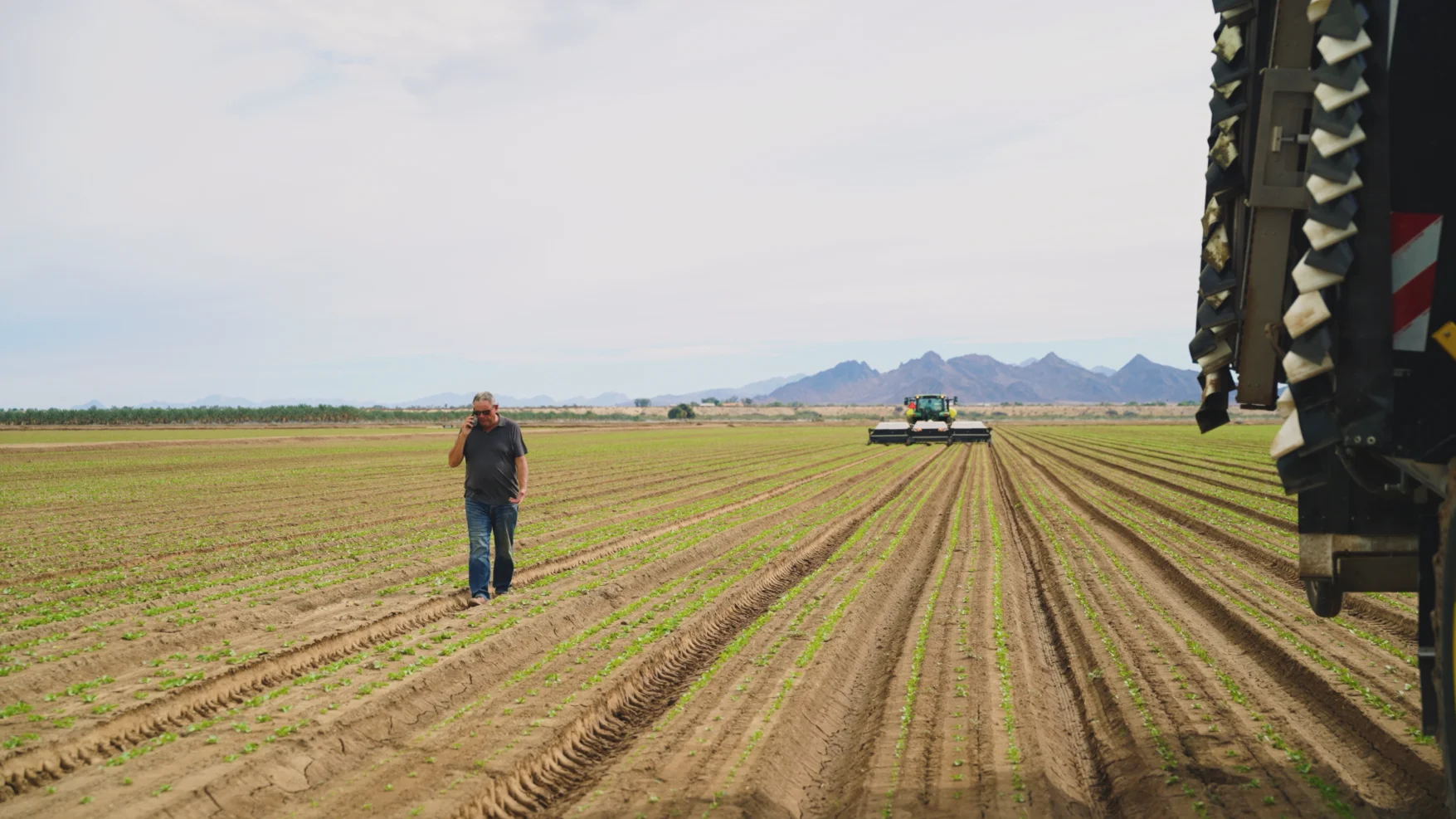
For growers considering precision spraying, this is an important part of the evaluation. Technology adoption is not simply about adding a machine to an existing workflow. It is about understanding how equipment, planting practices, and field management can work together to achieve the desired results.
Support That Extends Beyond the Equipment
For both the grower and the dealer, reliable support was a key consideration in evaluating ARA. Copass emphasizes that even the best dealer cannot deliver a successful customer experience without a manufacturer that stands behind its equipment. Growers need confidence that help will be available when questions or technical issues arise.
“The one thing that was important for me in the evaluation of the ARA was the support that we're going to get from the company itself,” Copass explains.
He describes why manufacturer support is essential to building confidence among growers:
“I could be the greatest dealer in the world, but if the equipment doesn't work and the manufacturer doesn't support the dealer and the dealer can't support the grower, they're fearful and they're not going to try the piece of equipment.”
Copass praises Ecorobotix for listening to the needs of the U.S. market and working with its dealer network to establish the right support structure.
“I think what's been masterful on Ecorobotix's part is the fact that they recognize that we've had long conversations about what staff and support look like, and they actually listen to the US consumer.”
For Nickerson, access to technical assistance is an important part of operating advanced agricultural equipment.
“When you have issues, you call somebody domestically, they remote in and they try to get you going as quick as they can because it is technology and we are going to have issues with it.”
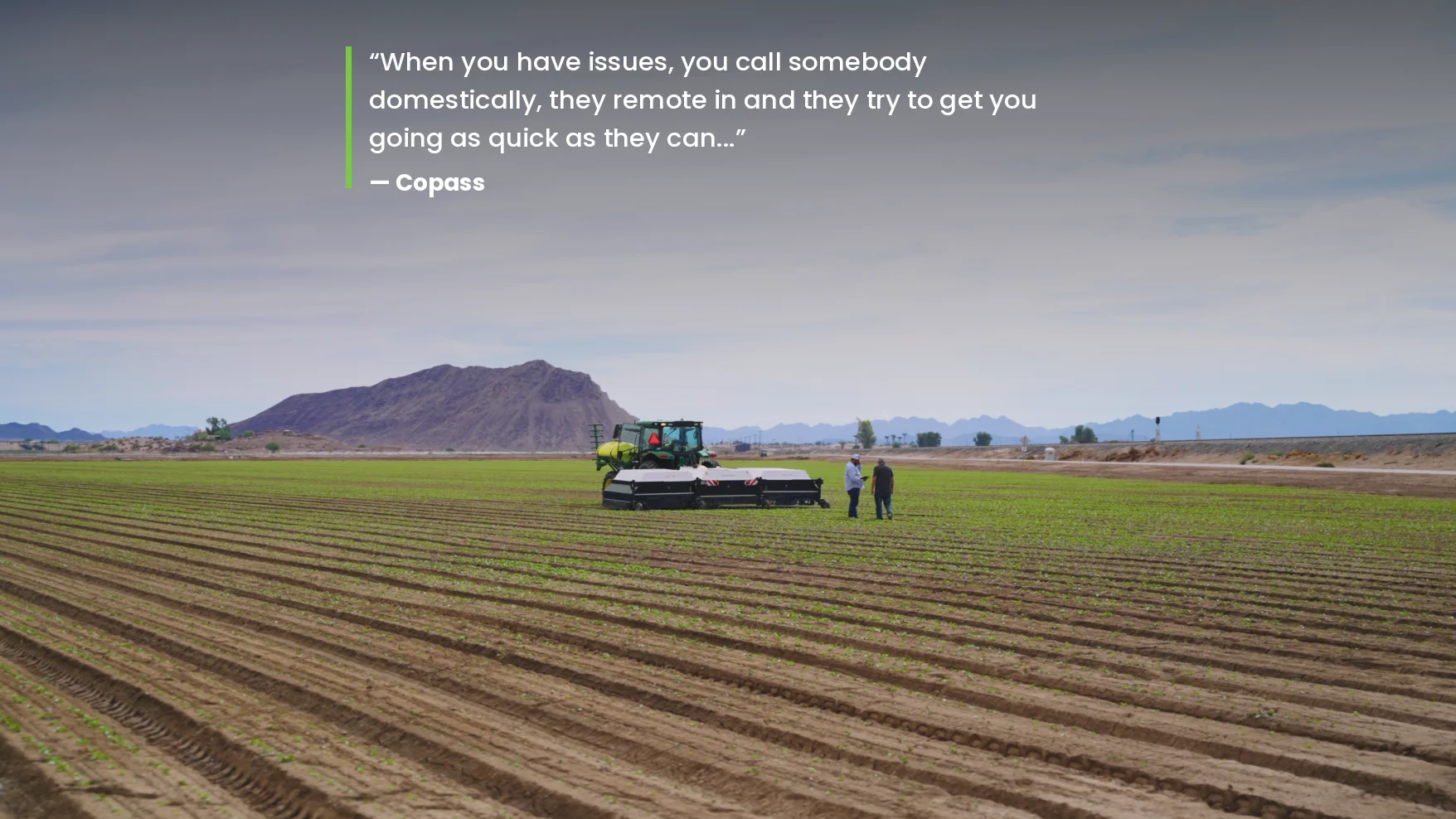
Copass adds that the ARA team is readily available to support growers and dealers in the U.S. market. He explains that the combined support network helps growers understand that assistance extends beyond the local dealer to include the manufacturer and its technical team. From initial setup and training to troubleshooting and adjustments, this collaboration helps growers integrate the technology into their operations and address challenges as they arise.
For growers adopting advanced agricultural technology, reliable support can be just as important as the equipment itself. Having access to people who can help get the machine running, make adjustments, and provide guidance in real time can make a meaningful difference in a demanding production schedule.
See What Precision Spraying Could Mean for Your Lettuce Operation
Every growing operation has its own challenges, from weed pressure and planting practices to labor availability and the need to cover large acreages efficiently. The right approach starts with understanding those challenges and evaluating how precision technology can fit into an existing system. Ecorobotix’s ARA precision sprayer is designed to bring a more targeted approach to crop care, helping growers rethink how they manage weeds and thinning in their fields.
Interested in exploring precision spraying in lettuce and leafy greens? Learn more about ARA.
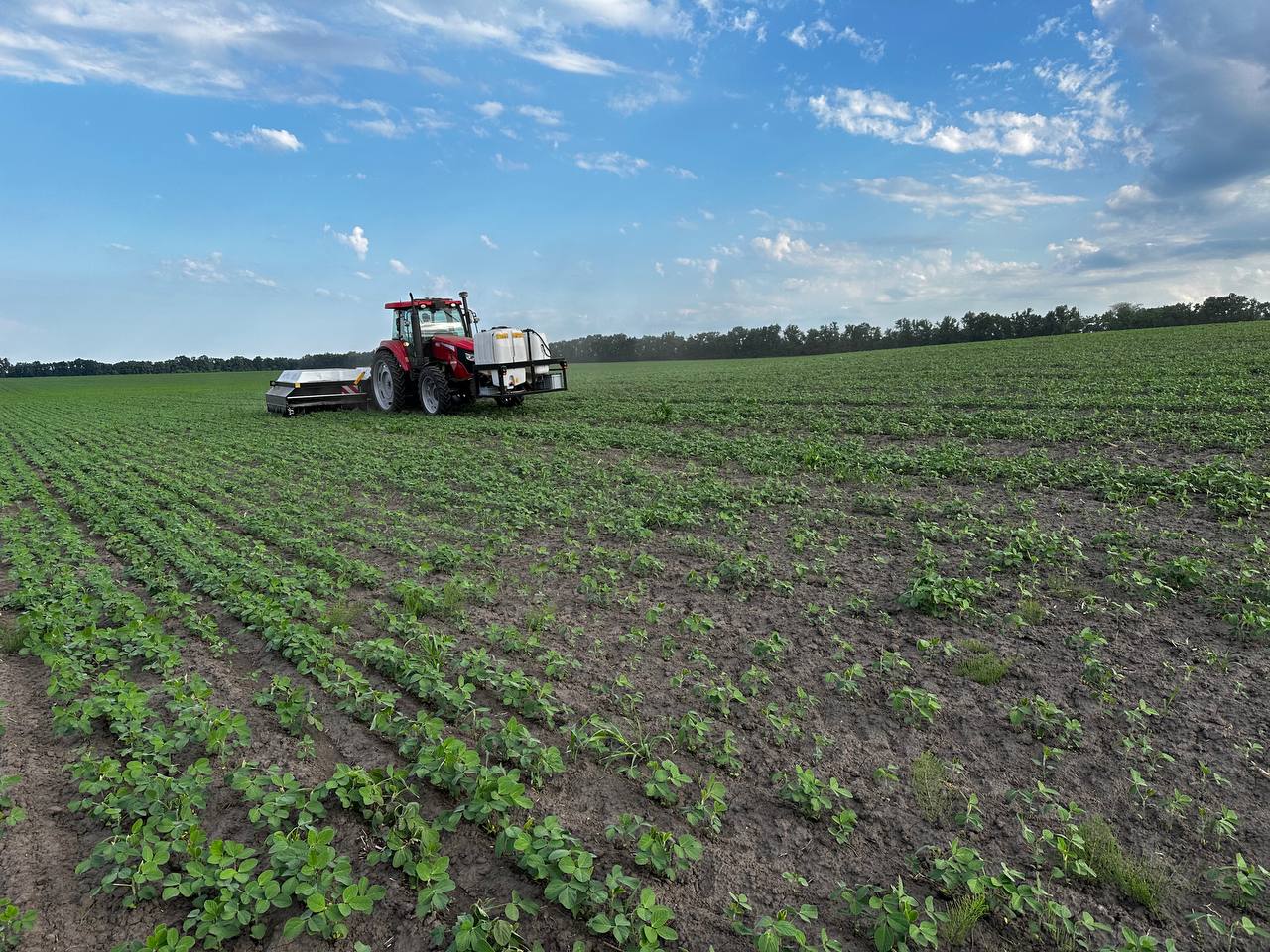
In central Ukraine's Cherkasy Oblast, Artur Nalbandyan, co-owner of STOV “Druzhba” farm, manages 2,700 hectares of corn, sunflower, soybean, winter rapeseed, barley and wheat across the region's forest-steppe landscape. With this area being known for light sandy soils, farming here presents unique challenges. The soils warm quickly, but retain little moisture, requiring careful attention to irrigation, moisture conservation, and cultivation practices.
Navigating these conditions has shaped Artur's approach to farming. He views agriculture as a combination of science and practice, believing there is no universal solution. Instead, a good approach is adapting to the unique conditions of each season. As Artur explains, “Every field, every season, and every year brings new challenges.”
Part of Artur’s approach to finding the right solution for each field is regularly testing different solutions to see what works best for his operation. In 2024, Artur tested 300 hectares of corn and soybeans with Ecorobotix’s ARA™ Ultra High Precision Sprayer using algorithms that were still in the development phase. The results were immediate and measurable. With ARA, he achieved 40–90% savings on herbicides and fertilizers, depending on weed pressure and crop type. He also recorded a 1–3% yield increase in corn, equivalent to 140–420 kg/ha.
“It is especially rewarding when, through knowledge, accurate analysis, and teamwork, we manage to unlock the potential of a field and achieve a better harvest,” says Artur.
What began as a test has since become an integral part of Artur’s broadacre farm. Two years later, ARA is used across his operation. By identifying weeds and treating only the targeted plants, ARA enables Artur to replace his broadcast spraying with a more precise approach to crop protection where he can respond to each field’s varying weed pressure.
“We see that this technology opens up a new approach to plant protection, where decisions are made with maximum precision and resources are used much more efficiently,” he says.
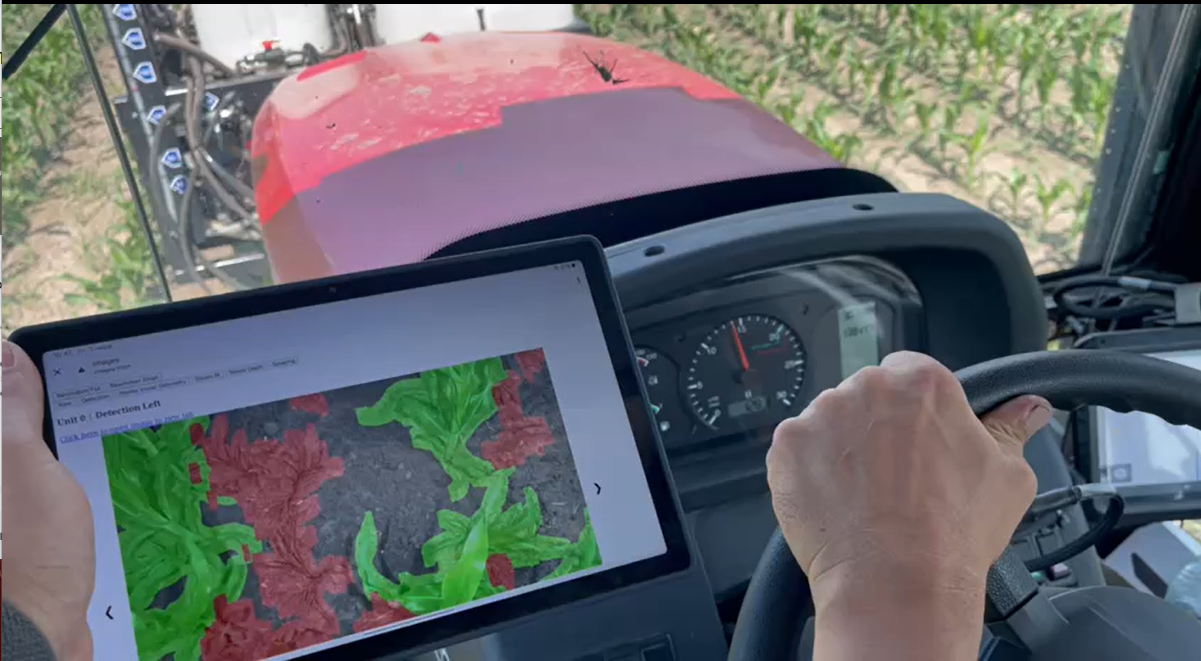
Across the farm, he estimates that ARA has reduced plant protection product use by an average of 70%, demonstrating that the same agronomic and economic advantages achieved in smaller fields can be delivered at scale in large broadacre operations.
With 2,700 hectares and multiple crop types, Artur needs a machine that helps him stay adaptable and respond to each challenge with precision. By significantly reducing the amount of product applied to each field, ARA helps limit the accumulation of plant protection products in the soil. This not only helps protect soil health but also gives Artur greater flexibility when planning future crop rotations, allowing him to move crops between fields with less concern about residual products affecting the next crop.
These benefits support Artur's goal of building a more resilient farm. Looking ahead, he is committed to aligning his practices as closely as possible with evolving European standards.
“Especially in light of the ban on many active substances in EU countries and the increasing requirements for environmental sustainability” he explains.
Ultimately, Artur's 300-hectare ARA trial in 2024 was more than an experiment, it was an investment. By testing the technology, he was able to find that ARA could help reduce inputs, maintain productivity, and support the flexibility needed to navigate changing agricultural regulations. As European sustainability requirements continue to evolve, ARA is helping Artur stay ahead of these changes while managing his hectares of broadacre crops more efficiently and sustainably.
L & L Ag Production uses ARA to target weeds, reduce herbicide use and labor, and explore a more targeted approach to crop protection in onions, alongside results from onion trials in the U.S. and Europe.
For Cody Anderson of L & L Ag Production in Connell, Washington, the idea of targeted spraying is not new. It is something he had been thinking about long before technology existed to make it possible.
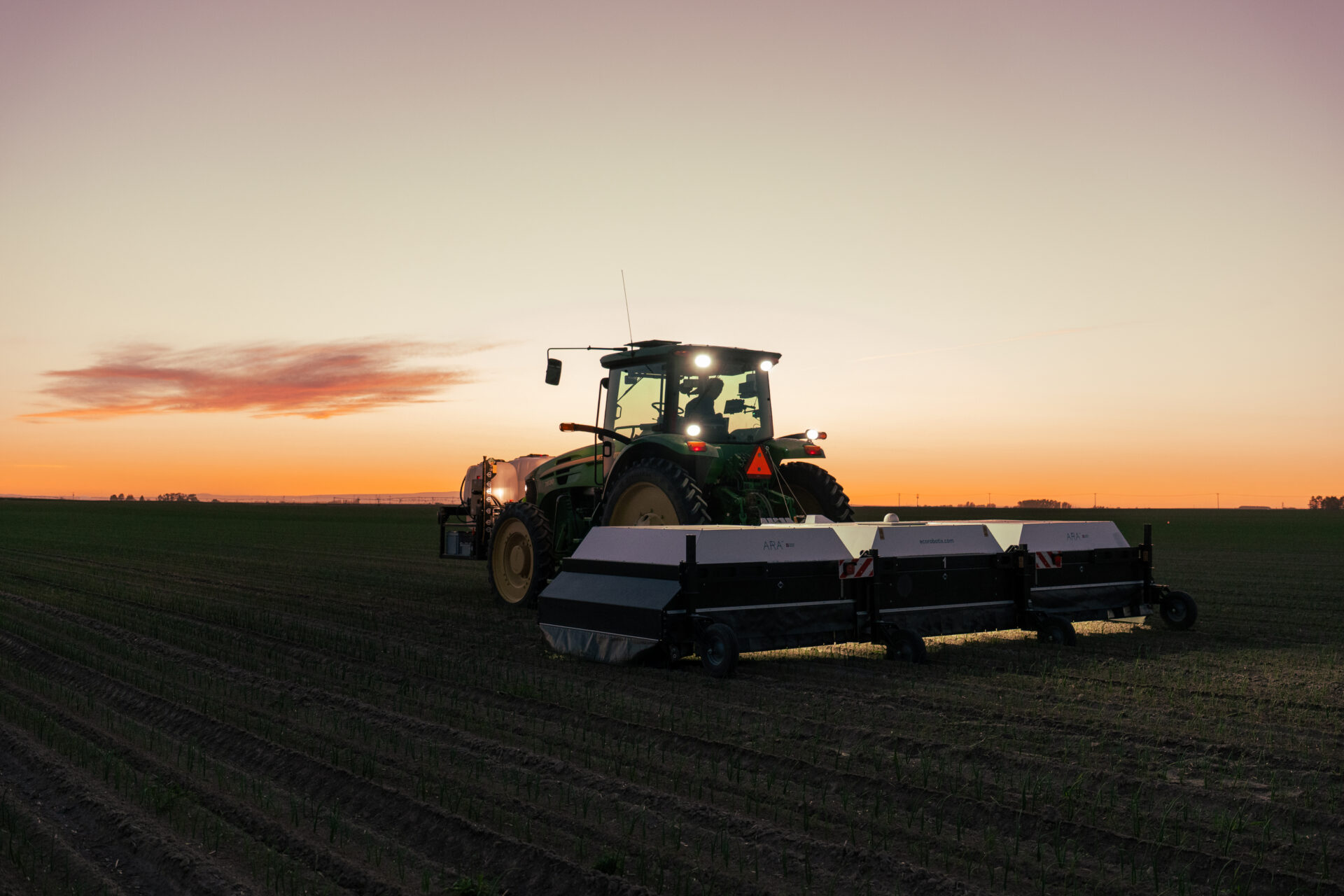
Founded in 1980, L & L Ag Production has been farming in the region for 45 years, growing onions alongside a variety of vegetable seed crops. For the past two years, the farm has been using the ARA Ultra-High Precision sprayer from Ecorobotix across its crops, incorporating the technology into its approach to weed control.
“We've been asking for something like the ARA for forever,” says Cody. “I can remember standing in an onion field, with volunteer potatoes growing in it, and just thinking: if somebody could make a machine that would just spray those potatoes. We don't need to spray the whole field.”
Volunteer potatoes are among the farm’s more challenging weeds to manage. At the same time, herbicide resistance is an increasing consideration for onion growers, particularly where the same chemistries have been used repeatedly over many years. For L & L Ag Production, ARA provides another option: treating individual weeds rather than applying a broadcast treatment across the entire field. (See ARA in onions)
The approach gives the farm greater flexibility in its weed-control strategy. For example, targeted applications can allow growers to consider different herbicides or application rates for specific weed populations without necessarily applying those treatments across the whole field. The difference in application volume can also be significant. Cody estimates that ARA applications on the farm typically use around 3–12 gallons per acre, compared with approximately 40–50 gallons per acre for a broadcast application.
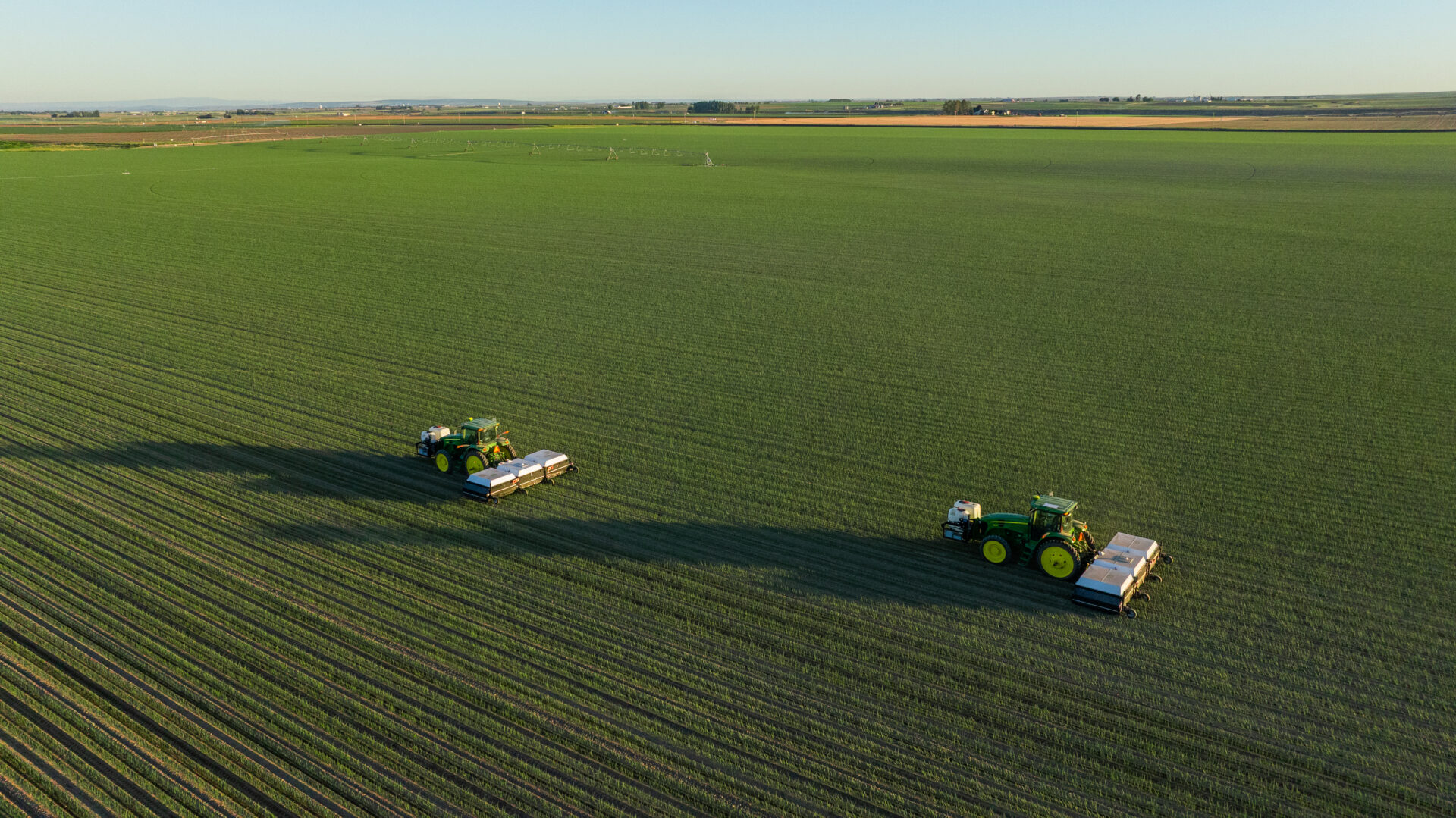
Labor is another consideration. On a 140-acre field, Cody says two ARA machines can complete the work in a day with only two people. A comparable targeted-weeding operation could take most of a week, while manual weeding would require a crew of 30–40 people working for several days.
“For us, this one has been a no-brainer with the savings and some of the labor,” Cody explains. “You’re just so surprised at how effective it [ARA] is and the job that it does.”
Looking Beyond One U.S Farm
The experience at L & L Ag Production is consistent with a growing body of field experience using ARA’s precision spraying in onions. Today, more than 100 ARA sprayers are being used across onion production in the United States, giving growers and agronomists an expanding base of real-world experience with plant-by-plant precision spraying.
Onions have been a focus crop for Ecorobotix since the early development of its technology. Over the past decade, the company has collected field data and conducted trials across onion-growing regions in the United States and Europe, including differing weather, soil types, and farming methods. This work has contributed to the development of ARA’s onion crop model and provided opportunities to evaluate Plant-by-Plant AI detection™ in a range of production systems.
Recent trials in the U.S. Southeast provide one example. In transplanted onions, the trials recorded an average reduction in herbicide use of around 60% compared with broadcast applications. The trials also reported differences in weed control and crop phytotoxicity, with the targeted approach showing reduced crop injury under the conditions tested. The trials recorded fewer unmarketable bulbs as well, with a reported reduction of 32% in 2024–25 and 49% in 2025–26. Higher yields were also recorded alongside the reduced crop injury.
These results are specific to the trial conditions and should not necessarily be interpreted as outcomes that will occur in every field. However, they illustrate the potential of precision spraying as another tool for growers managing weeds in transplanted onions.
The underlying principle is straightforward: rather than treating an entire acre uniformly, ARA uses computer vision to identify weeds and direct treatment toward individual plants. For growers dealing with herbicide resistance, input costs and labor constraints, this approach may offer another way to allocate crop-protection inputs, applying treatment where weeds are present while reducing applications to areas that do not require them.
Experience Across Onion Fields Worldwide
The U.S. results add to field experience gathered through ARA onion missions from across the world. Across nearly 800,000 acres, Ecorobotix reported herbicide savings of up to 95%, with plant protection product use reduced by 80% in most cases.
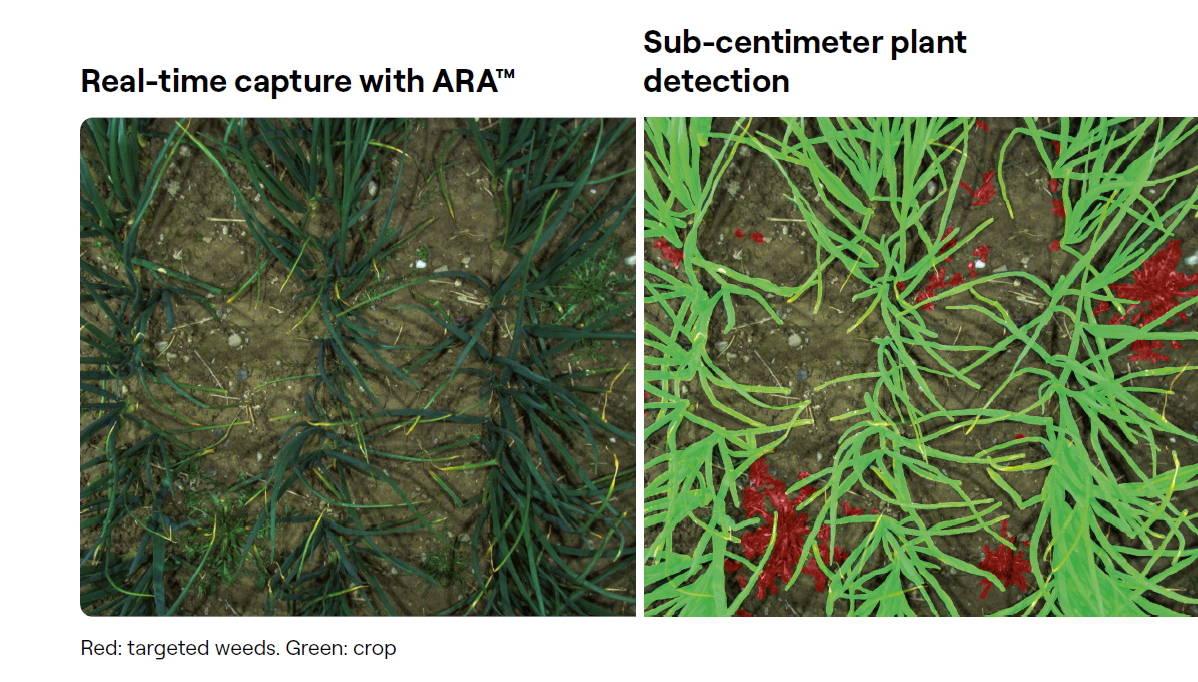
The results come from a range of commercial field missions rather than a single controlled trial, and application savings vary depending on weed pressure, field conditions, crop stage, and other factors. One of the potential advantages of targeted spraying in onions is the ability to detect weeds within the crop rows. This can allow growers to focus on weeds that might otherwise be difficult to address without treating surrounding onion plants.
Reducing the area treated can also reduce the overall amount of plant protection products applied to the field. In some conditions, this may help limit unnecessary crop exposure and associated phytotoxicity, although outcomes will depend on the crop, product, rate and environmental conditions.
From a Long-Standing Challenge to a New Solution
The idea Cody remembers having while standing in an onion field, a machine that could spray volunteer potatoes without treating the entire field, has become a tool the farm can use as part of its day-to-day weed-control program. After decades of conventional broadcast applications and manual weed control, ARA gives the farm another option for addressing difficult weeds while managing herbicide use and labor requirements.
And L & L Ag Production is one example of a broader shift in how precision spraying is being explored in onions. Field experience from the U.S. and Europe suggests that when weeds can be identified and treated individually, growers have an opportunity to use crop-protection inputs more selectively rather than applying them uniformly across the entire field.
The approach is not about replacing every existing weed-control practice. Instead, it adds another tool to the grower’s toolbox, one that can help target weeds where they are found, reduce unnecessary applications, and potentially ease some of the labor and input pressures associated with conventional weed control.
For growers facing similar challenges, the next question is not simply whether targeted spraying works, but where it could fit within their own production system. Interested in seeing what targeted spraying could look like in your onion fields?
Visit (link)
“We’re seeing a return on investment everyday”
Cleaner paddocks, healthier crops and significant chemical and labour cost savings are just some of the benefits Australian leafy green vegetable grower Steve Kluck is enjoying since adopting the ARA Sprayer and its AI spot-spraying technology on his farm.
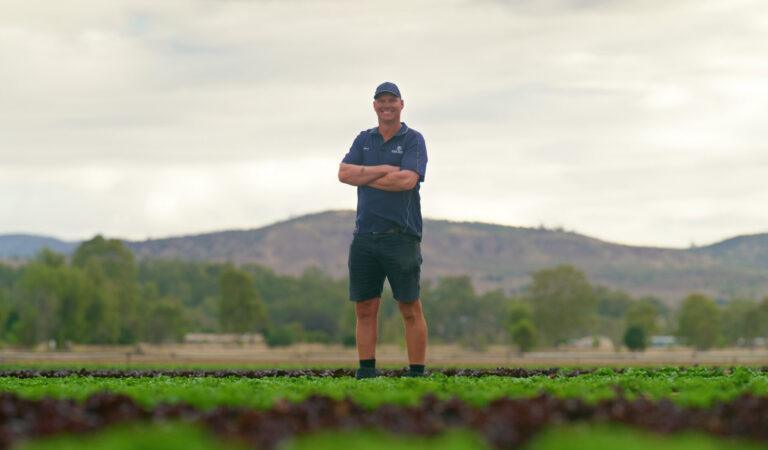
Steve grows cabbages, lettuce, celery, kale and wombok at Limit Farms in Queensland’s Lockyer Valley, where weed control has historically been a time consuming and costly challenge.
Steve says the ARA has revolutionised his weed control strategy and is now an integral part of his toolkit.
“Before we had the ARA we were mechanically weeding everything, doing a lot of hand weeding and using more pre-emergent herbicides, which can have a stunting effect on the crops and reduce yield,” Steve explains. “Weed pressure is a big issue for us and we had been looking at various options for several years. We settled on this machine due to its ability to cover the ground fast and efficiently.”
The Lockyer Valley is widely known as “Australia’s Salad Bowl” for its reputation as a
premier vegetable growing region. Steve Kluck is a fifth generation farmer, managing 400 hectares across eight different sites.
Limit Farms supplies produce lines to multiple supermarkets, processing customers and fresh produce markets along Australia’s east coast.
Steve credits the ARA for helping reduce his reliance on pre-emergent herbicides, improving the overall health of his crops in the process, especially in the second crop for a season.
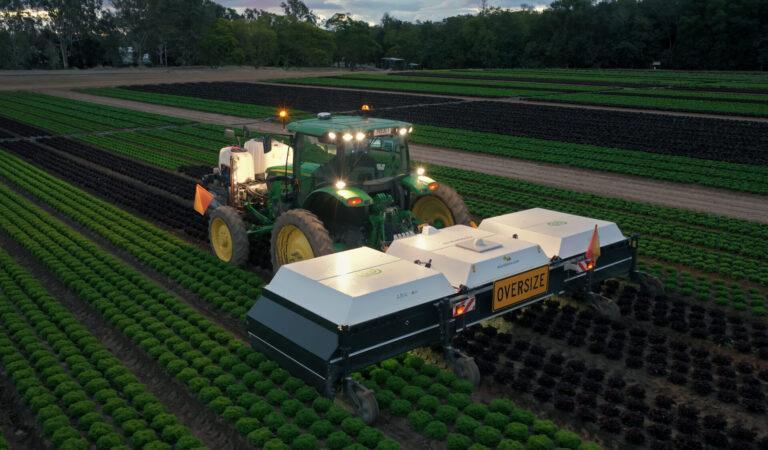
“It’s allowed us to not use pre-emergent herbicides in a lot of our crops. We can just go through and spray the gaps with an organic registered product which is a great thing for us going forwards,” Steve says.
“We’re not getting buildups in the soil; we haven’t got that leftover herbicide.
“A weed-free crop will yield better, it’s more uniform and it’s a cleaner crop to harvest and market.
“It's also reducing our weed load over time, so every year we're knocking out more weeds, there's less going to seed, so long term we should see less and less pressure from weeds.”
Farm Concepts Director Braden Hellmuth, an Australian distributor of the ARA Sprayer, says it’s rewarding to see how the ARA’s plant-by-plant AI spot spraying technology can help growers like Steve solve various challenges.
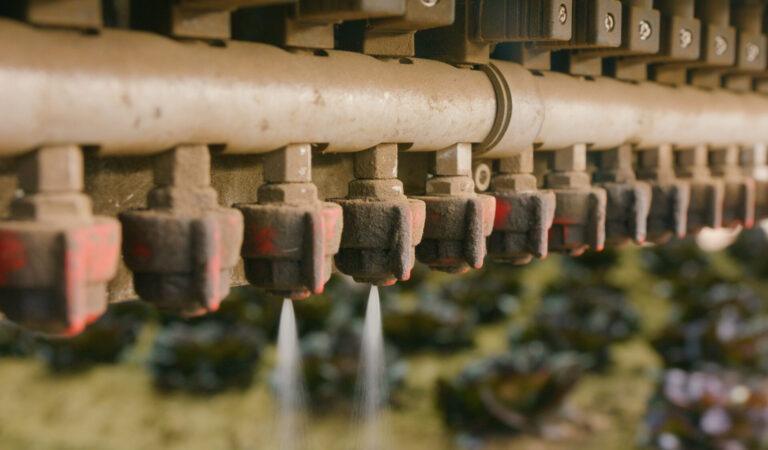
“The thing I love the most about the ARA from Ecorobotix is how we can change the way a farmer is using their traditional chemistry,” Braden explains. “The sprayer can operate down to a six-by-six centimeter spot, which allows us to get in and
get those weeds that are around the plant without creating chemical stress on the plant that’s going to hold it back and reduce its yields.”
The other significant benefit Steve Kluck is enjoying at Limit Farms is the reduction of time spent removing weeds with traditional methods, especially when all the crops are irrigated using drip tape.
“Avoiding the tape while removing the weeds is very challenging,” Steve explains. “As a business we’ve always been focused on having clean farms so we’ve spent a lot of
money and time removing weeks through mechanical means and hand weed chipping, at a fair cost to our business. The number of people with the skillset required is declining too.
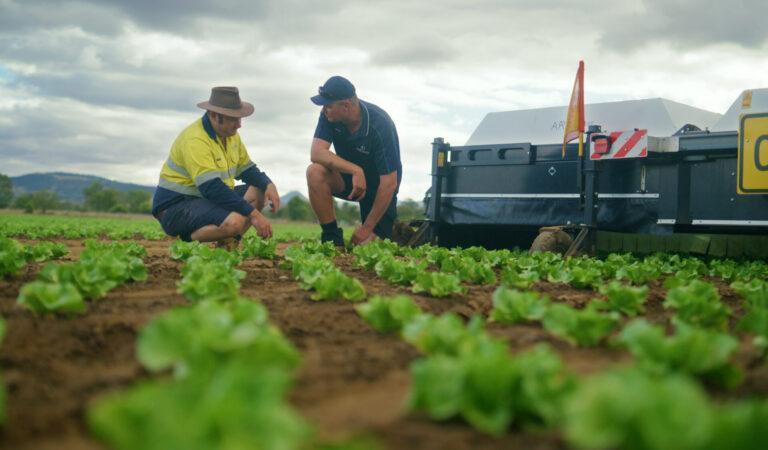
“Now those hours have significantly reduced. We grow vegetables all year round and nearly every planting is sprayed with the ARA, so it’s become an integral part of the business that we’d struggle without.”
Having used the ARA for almost 12 months, Steve says it’s also an easy and simple
machine to use and one he’d happily recommend to other vegetable growers.
“I think we're seeing a return on investment every day for this machine,” Steve says.
“If you do your sums right, you’d be surprised how quickly it will pay itself off in a medium sized farming business.
“It's going to make our life easier going forwards and probably open a few more opportunities in how we grow crops and manage our cropping.”
For more information on how the ARA Sprayer could transform your farm, contact Farm Concepts.
While traveling through the Haute-Savoie region of France, I took the opportunity to visit our client, Nathan Jacquet, owner and operator of ETA La Vallée des Usses. His company supports local farmers with a range of services, including precision spraying and manure spreading.
After understanding Northern France’s struggle with perennial weed infestations, where more than 50%1 of the farmers stated Rumex infestations, I became curious as to how Jacquet was getting along with his ARA™ sprayer on the Southeastern side of the country, as Rumex infestations were one of the main reasons why he purchased the machine.
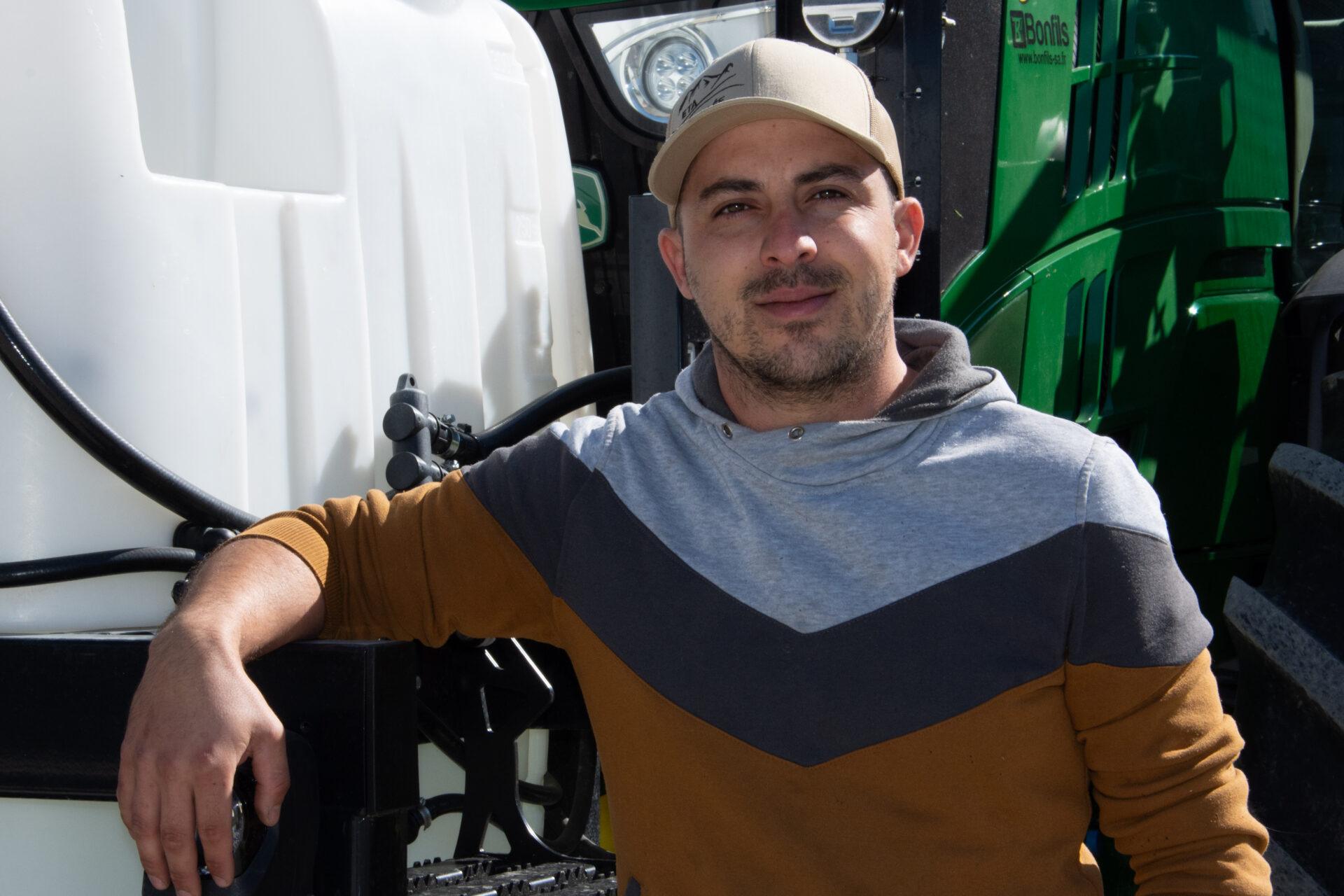
As I pull into the field, Jacquet is already unfolding the AI-powered sprayer. After a quick greeting, I ask Jacquet’s perspective on the impacts of Rumex in the alpine plains of Haute-Savoie.
“In our sector, where we produce forage for barn drying or baling, Rumex is problematic because it’s a fatty plant that is very hard to dry,” Jacquet said. “Eliminating it improves yield, forage quality, and drying efficiency.”
Rumex quickly takes over grasslands, with mature plants able to produce up to 60,000 seeds in a single year2. The plant’s tough tap roots make it difficult to remove and often overpower pastures, causing long term issues for farmers as it reduces quality and quantity of forage available for livestock.
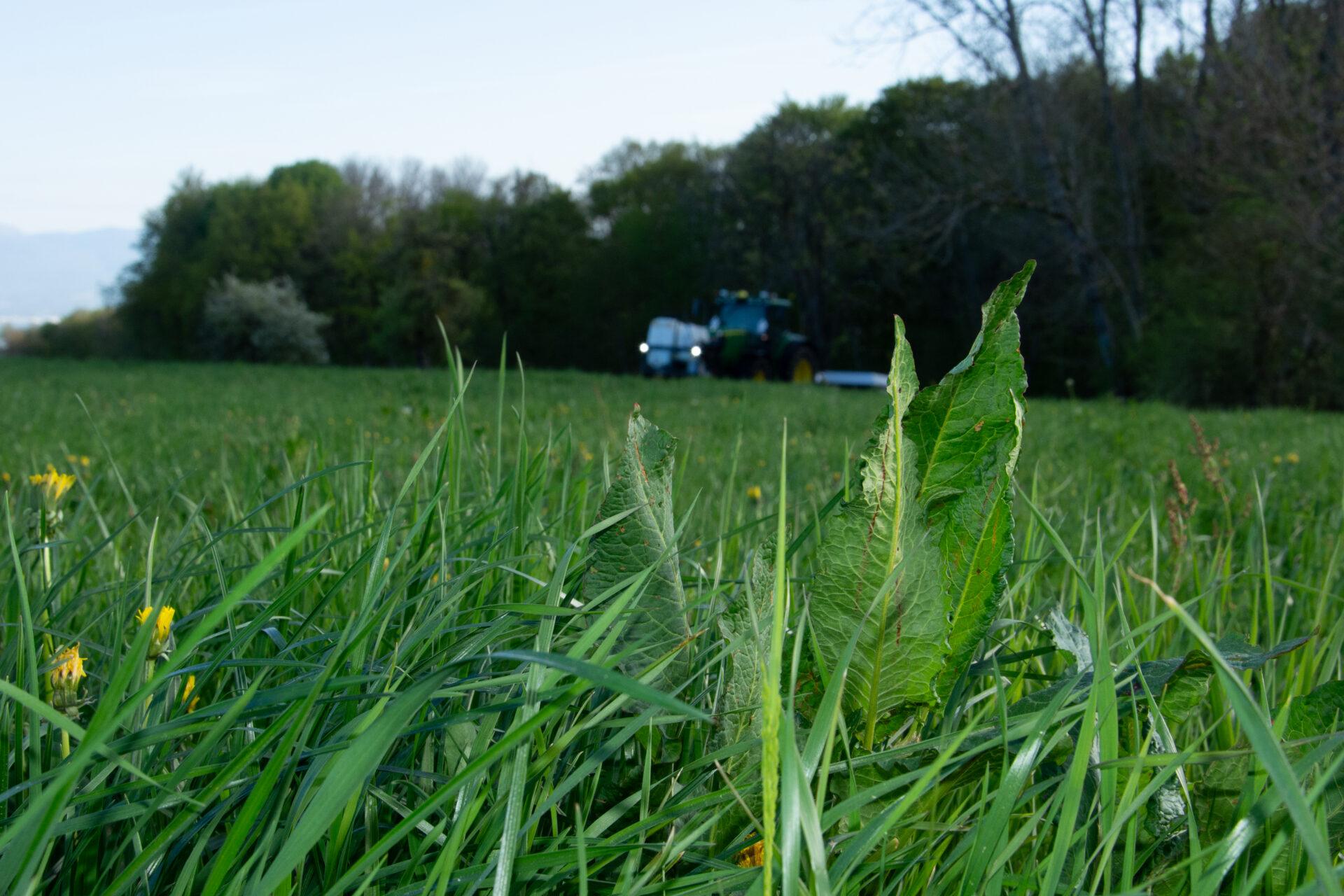
Because eliminating Rumex directly translates into higher yields and better-quality forage, some organic farmers in Switzerland devote more than 1,000 hours per year3 to manual weeding alone. In the fields of Haute-Savoie, managing Rumex is just as critical. Jacquet has seen his clients dedicate countless hours to manual weeding, resulting in long days only to end in frustration as many plants were missed. Some of his other clients used broadcast spraying, which damaged up to 75% of their harvest (says Jacquet).
As I watch the ARA’s wings set on the ground, I am reminded of when I first met Jacquet. He had invited several of his clients to a demonstration of the ARA organized by Ecorobotix and equipment dealer Stecomat. Because he wanted to make sure there was a real demand for something like the ARA, he had spent most of the time discussing with his clients.
When I ask whether his clients supported the decision, Jacquet says, “turns out they were waiting for someone to take the step and invest in this type of solution for the Rumex problem.”
Over the course of treating 1,000 hectares with the ARA, Jacquet has seen firsthand the benefits of its 6 × 6 cm spray precision. By targeting only Rumex plants and avoiding unnecessary herbicide application, he has cut chemical use by up to 80–90% while helping his clients achieve 10–30% more usable forage yield (says Jacquet).
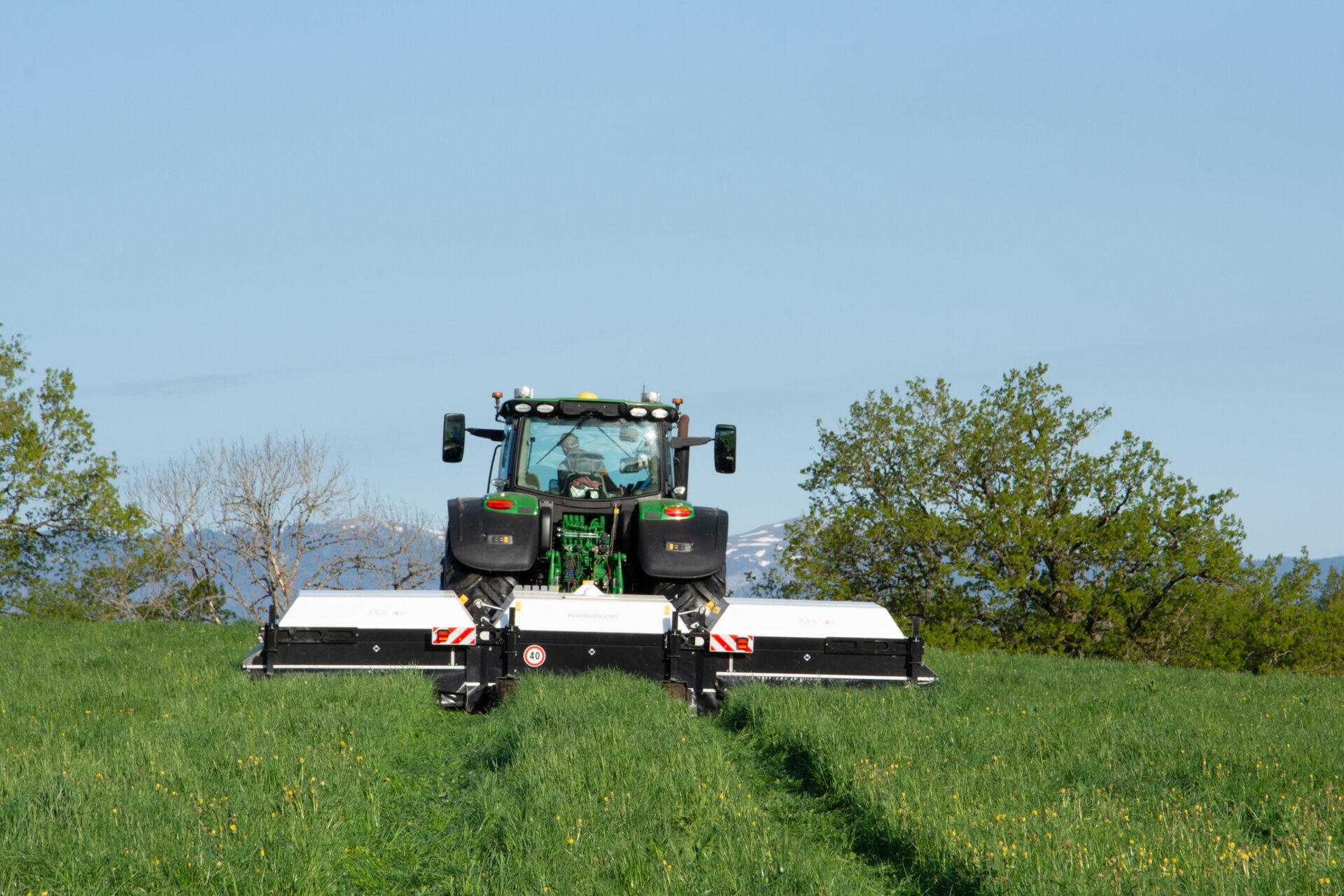
In comparison to how his clients treated Rumex infestations before, the ARA’s ability is almost unbelievable. As I am discussing this with Jacquet, he points out “Until you’ve seen it, you simply cannot believe that an agricultural machine can achieve such exceptional precision today.”
He then shows me the tablet that controls the machine. In just three clicks, he selects the weed to target, chooses which treatment to use, and adjusts the weed pressure depending on the field’s condition. Despite the simplicity of the system and overall support when he first purchased the machine, he admits that some clients are initially hesitant about the technology.
"Clients are often skeptical at first,” Jacquet says. “After seeing the machine in action, they call back saying they are amazed by the quality of work and precision.”
Jacquet’s clients can see a difference with the ARA after just one pass. However, for him, the real advantage builds as he uses the ARA on repeat fields. With each follow-up call, he’s able to compare records from previous applications with Ecorobotix's mapping and app.
Jacquet shows me the app and clicks on a field he has treated. He points to the areas of the field where the ARA spot sprayed and explains that, eventually, he will be able to see where regrowth appears and how weed pressure changes from one season to the next. Over time, he can focus more on problem areas and adapt to the specific conditions of each field, offering a personalized weed management approach for each of his clients.

As my visit nears its end and I gather my things, I know Jacquet’s testimony has convinced me of the ARA’s effectiveness, so I ask him my final question.
“Who would I recommend this machine to? Honestly, to myself,” he says with a laugh. “Given business growth, we’re already considering investing in a second machine.”
As I start my drive home and pass the fields of forage where Jacquet runs the ARA, I think about the transformation in weed control the machine brings to this area of Haute-Savoie. By decreasing chemical use and manual labor and only targeting Rumex plants, Jacquet's clients can choose an option that protects their soil, water quality, and environment and not compromise on effectiveness or the health of their crops.
References:
- Andert et al., “How Farmers Perceive Perennial Weeds in Northern France and Eastern Germany.” ↩︎
- Klötzli et al., “Key Management Practices to Reduce the Risk of the Occurrence of Rumex Obtusifolius in Productive Grasslands.” ↩︎
- Hatcher et al., “Biological Control of Rumex Species in Europe: Opportunities and Constraints.” ↩︎