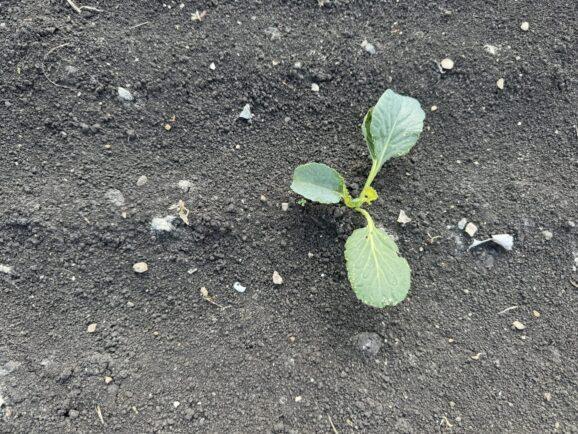


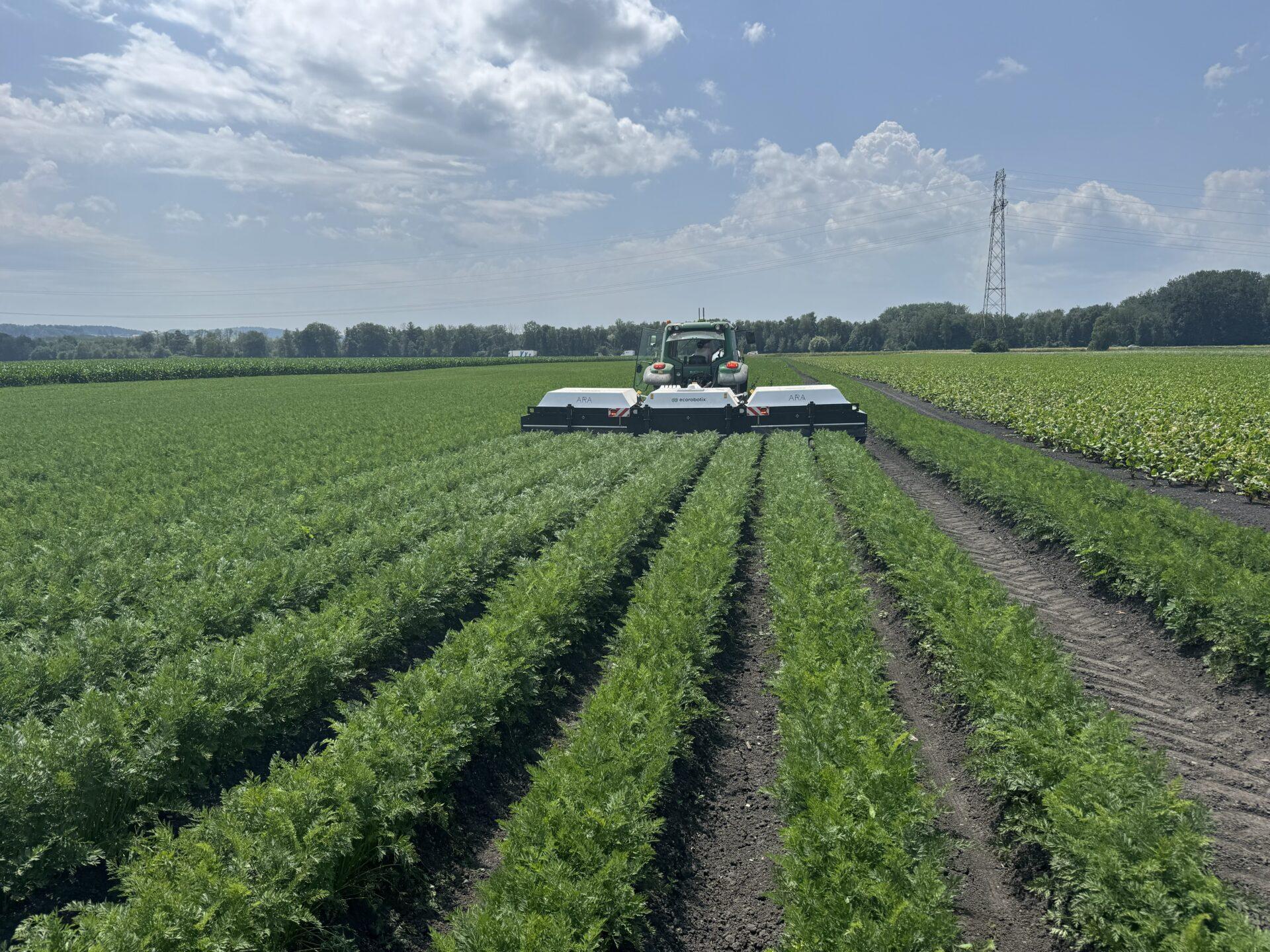
We are now in the last days of March. Winter is now behind us. Looking at the life of plants in the fields from this vantage point in Switzerland, it has been spring for a few weeks already. Soil temperatures are rising above 5°C. Fields begin to dry after winter rains and farmers are preparing for spring planting. In many regions of Europe and northern US, onions and carrots are being sown under plastic mulch, while the first broccoli and lettuce transplants are being set in open fields under protective covers.
At the same time, early weeds begin to germinate often emerging faster than the crops because they are well adapted to cool spring conditions. These first weed flushes can quickly compete with young vegetable crops for light, water, and nutrients, making early-season weed control critical. Farmers are therefore busy with seedbed preparation, planting operations, and the first crop protection decisions, aiming to maintain clean fields before weeds become established. For Ecorobotix, all these seasonal activities mean that the ARAs are slowly waking up.
In 2025 over 180,000 hectares of fields were treated during spring using ARA mainly to tackle weeds with an average of around 80% in herbicide savings. These results imply greater crop health while maintaining control of weeds.
New Algorithms are Out
The new crops we announced back in September are now out and ready for action. Key vegetable crops such as broccoli, cauliflower and green and red cabbages are available. These algorithms have completed their initial development phase and are ready to safely treat plants. In fact, their performance are so accurate, we are confident they are a game changer for these crops. They provide the badly needed flexibility to help growers face a lack of chemical solutions for weed management. For broccoli, the safety zone feature allows you to safely use non-selective contact herbicides with no harm to the crop.
Key updates to algorithms have been released. Our current crop algorithms are constantly being strenghened. Lettuce thinning and weeding has been improved especially with respect to detection of lettuce in early stages, preventing false positives, when small salads were detected as weeds.
The detection of weeds keeps going up. It is not just a question of recognizing a green plant from brown soil. It is not just detecting and differentiating crops from weeds. We now increasingly categorize between different types of weeds, making the distinction between monocotyledon weeds and dicotyledon weeds. This was already possible in onions. This treatment can now be done in other crops such as carrots, string beans, spinach, or chicory. Volunteer potatoes is another type of weed that can be more widely detected, being now available in onion, carrot, chicory and sugar beet.
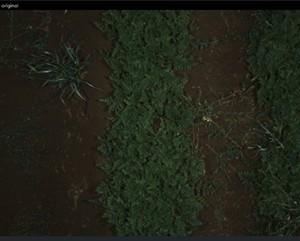
(1) Raw Image, RGB acquisition in carrots
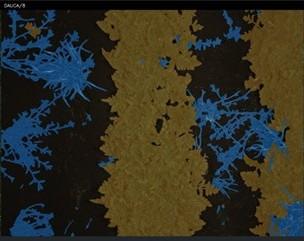
(2) carrots in orange, weeds in blue
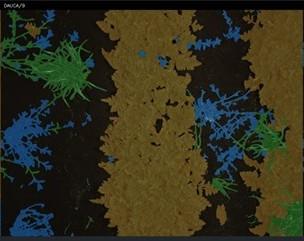
(3) weeds are categorized between monocotyledon in green, other weeds in blue.
Here above is an example of the improved detection that carrot growers can benefit from this year. The first image shows us the raw detection as taken by ARA. In the second image, we see the distinction between weeds in blue and the carrot crop in orange. In the last image, weeds are treated separately between ‘monocotyledon’ plants in green and other weeds in blue.
And finally, new upcoming crops are available such as tomato, garlic, red beet, celery and potato. These algorithms are available for free while they are being refined .
When it comes to Ultra-High Precision (UHP) crop care, performance is a constant search to be more refined, more precise, more accurate: more refined in the categorization of plants, especially to identify those that are harmful to a crop, more precise in mapping their position in a field, and more accurate in spraying at that location. This accuracy is the basis that allows for an overall reduction of phytotoxicity whilst actually getting the job done. It’s a win-win-win situation, for crop health, the environment and the grower.