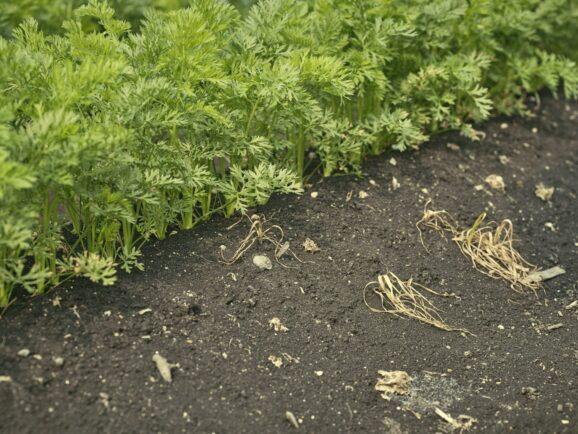


The limits of synthetic herbicides
Since the 20th century, synthetic herbicides have become key tools in weed management strategies, providing important economic and operational benefits. Along with other agricultural inputs, herbicides contributed to the increase in agricultural productivity over the past decades.
However, the intensive use of herbicides has led to several adverse effects. The over and repeated use of substances with the same mode of action leads to the development of resistant weeds, especially when low-diversity weed management strategies are employed. Herbicides also have both direct and indirect impacts on biodiversity, reducing habitat diversity for wildlife – including natural enemies of pests – and causing pollution-related harm to non-target organisms. Finally, agrochemicals can be harmful to human health through various routes of exposure, raising awareness among consumers.
For these reasons, the use of synthetic herbicides is increasingly regulated in some countries, while integrated weed management strategies are being promoted. As a result, there is a growing industry interest in identifying more sustainable options to synthetic herbicides. Natural-origin molecules are emerging as a powerful alternative, offering promising agronomic benefits with reduced impacts on health and the environment.
Bioherbicides: challenges and opportunities
Bioherbicides are a subset of biopesticides, typically derived from naturally occurring biological sources – such as microorganisms and plant extracts – or mineral sources (Cordeau et al. 2016). In contrast with pesticides made from synthetic molecules, biopesticides do not need to be synthesized as they use active ingredients already present in nature. The natural origin of some molecules does not eliminate environmental or toxicological risks – as illustrated by arsenic-based herbicides – highlighting the continued need for thorough risk assessment. Bioherbicides are underrepresented in biopesticides, with only a few products being commercially available. Their widespread adoption remains limited due to short shelf life, formulation instability, specific mode of action, inconsistent field performance, and high costs.
We present here an example of bioherbicides that remain underused and whose adoption could be facilitated through Ecorobotix’s UHP technology.
Fatty acids
Herbicidal fatty acids, naturally extracted from plant oils, are non-selective herbicides applied to plant leaves after weeds have emerged. They work by drying out the plants and quickly burning them down. Different molecules – pelargonic, capric and caprylic acids – are registered in several countries, including in the European Union. These biobased herbicides are increasingly used to eliminate weeds from gardens, lawns, golf courses, parks, walkways, roads, and industrial sites. However, their use in farming is still scarce due to their high cost per unit combined with the higher recommended doses (Ciriminna et al. 2019; Loddo et al. 2023). Fatty acids are known for their low environmental toxicity, even under field conditions (European Food Safety Authority (EFSA) et al. 2021).
The herbicidal activity of fatty acids is most effective against broadleaf weeds during their early growth stages (Pannacci et al. 2022). Research shows that weed control can be improved by using different strategies, such as applying treatments several times at short intervals during the season or mixing the product with an adjuvant or another herbicide. (e.g., an essential oil).
One step further with Ecorobotix’s UHP
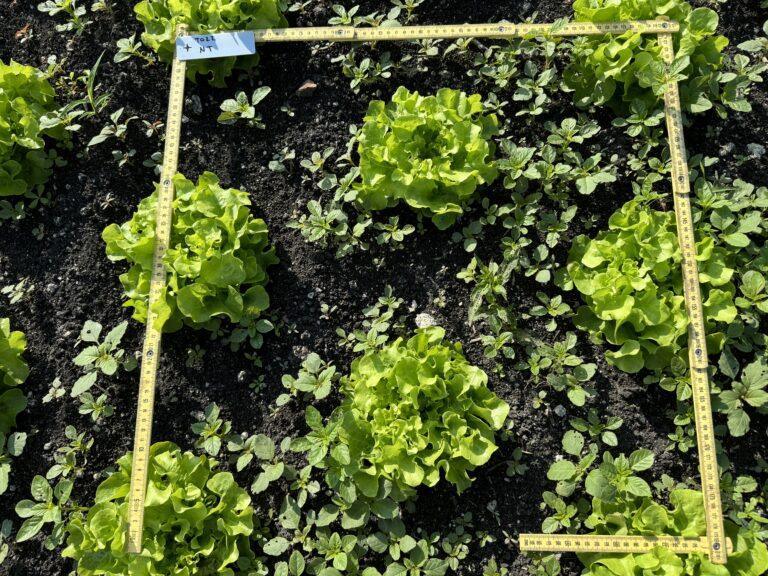
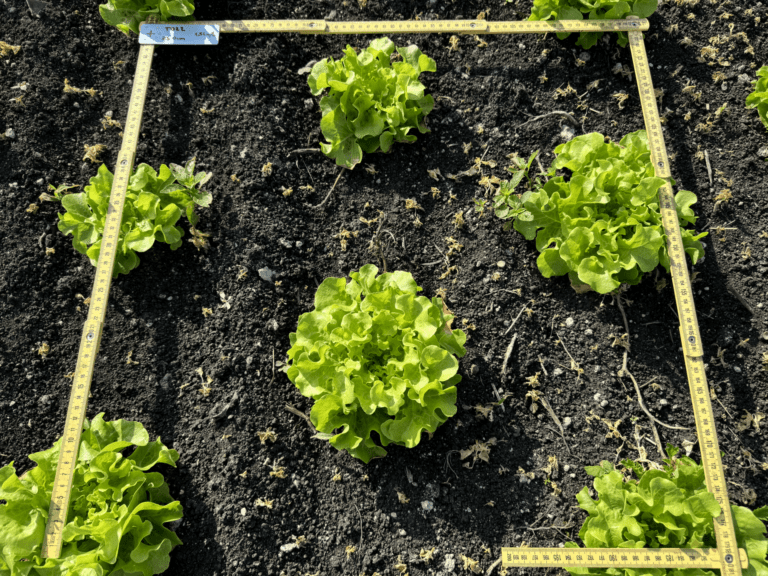
Ecorobotix’s Ultra-High Precision (UHP) spraying enables a major step forward in the use of bioherbicides. By targeting individual weeds, UHP makes it possible to apply non-selective molecules – such as fatty acids – in post-emergence while drastically reducing spray volume and therefore costs. Because their modes of action differ from those of synthetic herbicides, these solutions provide conventional producers with new options to combat herbicide-resistant weeds. UHP also creates potential synergies with mechanical weeding: bioherbicidal agents can support early weed control when in-crop mechanical operations are too risky, while follow-up applications after a rotary hoe or tine weeder can suppress later-emerging cohorts (Cordeau et al. 2016). In some countries, bioherbicides are registered for organic farming, offering new strategies to reduce weed pressure, limit tillage, and improve farm profitability.
In conclusion, the combination of bioherbicides with UHP spraying offers a highly promising approach within integrated weed management, effectively merging sustainability, safety, and agronomic performance.
References
Ciriminna R, Fidalgo A, Ilharco LM, Pagliaro M (2019) Herbicides based on pelargonic acid: Herbicides of the bioeconomy. Biofuels Bioprod Biorefining 13:1476–1482. https://doi.org/10.1002/bbb.2046
Cordeau S, Triolet M, Wayman S, et al (2016) Bioherbicides: Dead in the water? A review of the existing products for integrated weed management. Crop Prot 87:44–49. https://doi.org/10.1016/j.cropro.2016.04.016
European Food Safety Authority (EFSA), Alvarez F, Arena M, et al (2021) Peer review of the pesticide risk assessment of the active substance pelargonic acid (nonanoic acid). EFSA J 19:. https://doi.org/10.2903/j.efsa.2021.6813
Loddo D, Jagarapu KK, Strati E, et al (2023) Assessing Herbicide Efficacy of Pelargonic Acid on Several Weed Species. Agronomy 13:. https://doi.org/10.3390/agronomy13061511
Neal JC (2024) Biological Control of Weeds in turfgrass: opportunities and misconceptions. Pest Manag Sci 80:40–48. https://doi.org/10.1002/ps.7436
Pannacci E, Ottavini D, Onofri A, Tei F (2022) Dose–response curves of pelargonic acid against summer and winter weeds in Central Italy. Agronomy 12:3229