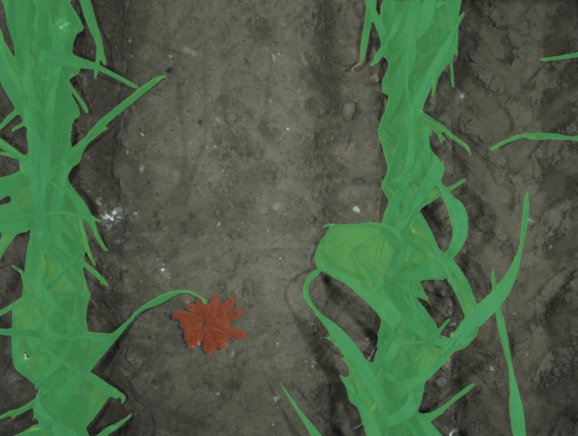


The corn algorithm by Ecorobotix is still under development. It’s one of the latest projects our team is working on, just like our soy algorithm. The corn algorithm is not yet available as a full product, but it’s already used as a test version by a few farms, mainly in Switzerland.
The corn algorithm might be slightly less challenging than others we’ve developed so far. This is mainly due to a simpler crop shape and a shorter vegetative period suitable for treatment than other crops like onion.
2022 is the first year where the corn algorithm is being used at scale. By monitoring results and analysing the data and images gathered by our users, we’re refining the algorithm.
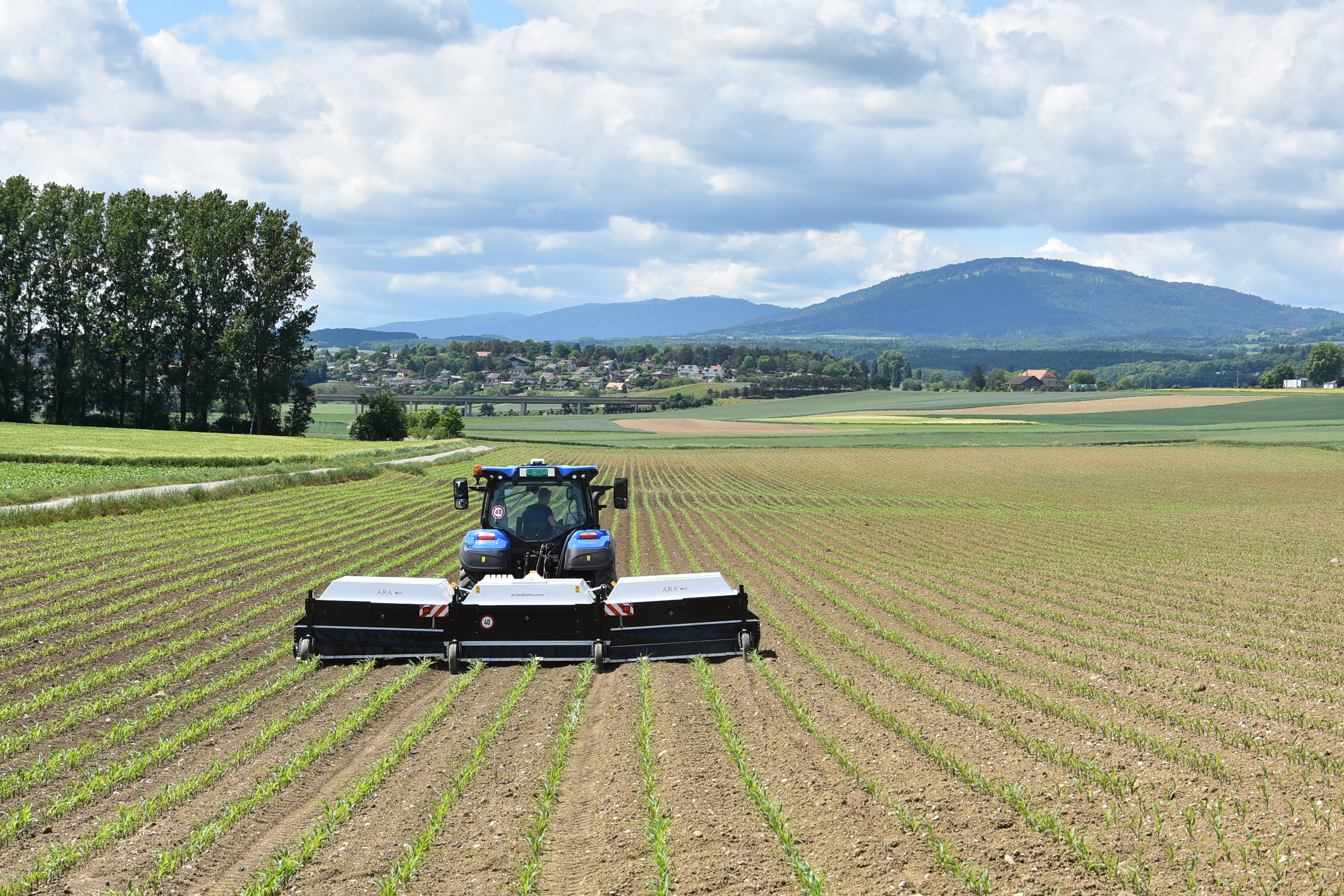
Still, first results are positive and we’ve already organised many test runs and demonstrations. In June 2022, we took part in the Field Crops and Grasslands Day, a technical event organised by the State of Vaud and Proconseil (Prométerre) in Granges-Verney (Switzerland).
The following footage shows a test run in Mathod (Switzerland). We used ARA to spray a selective herbicide in a cornfield.
Video of the test run
In the video, you can see that up to 7.5 km per hour, every weed was successfully detected by the recognition system and then sprayed. The effectiveness of both steps was visually assessed by experts following the machine.
Since we’re using a test version of the algorithm in this first year, we knew detection errors might happen. But we were happy to see they actually didn’t.
95% detection
Virtually every weed was detected by the recognition algorithm. They weren’t able to escape from ARA’s eagle eye, whatever the development stage.
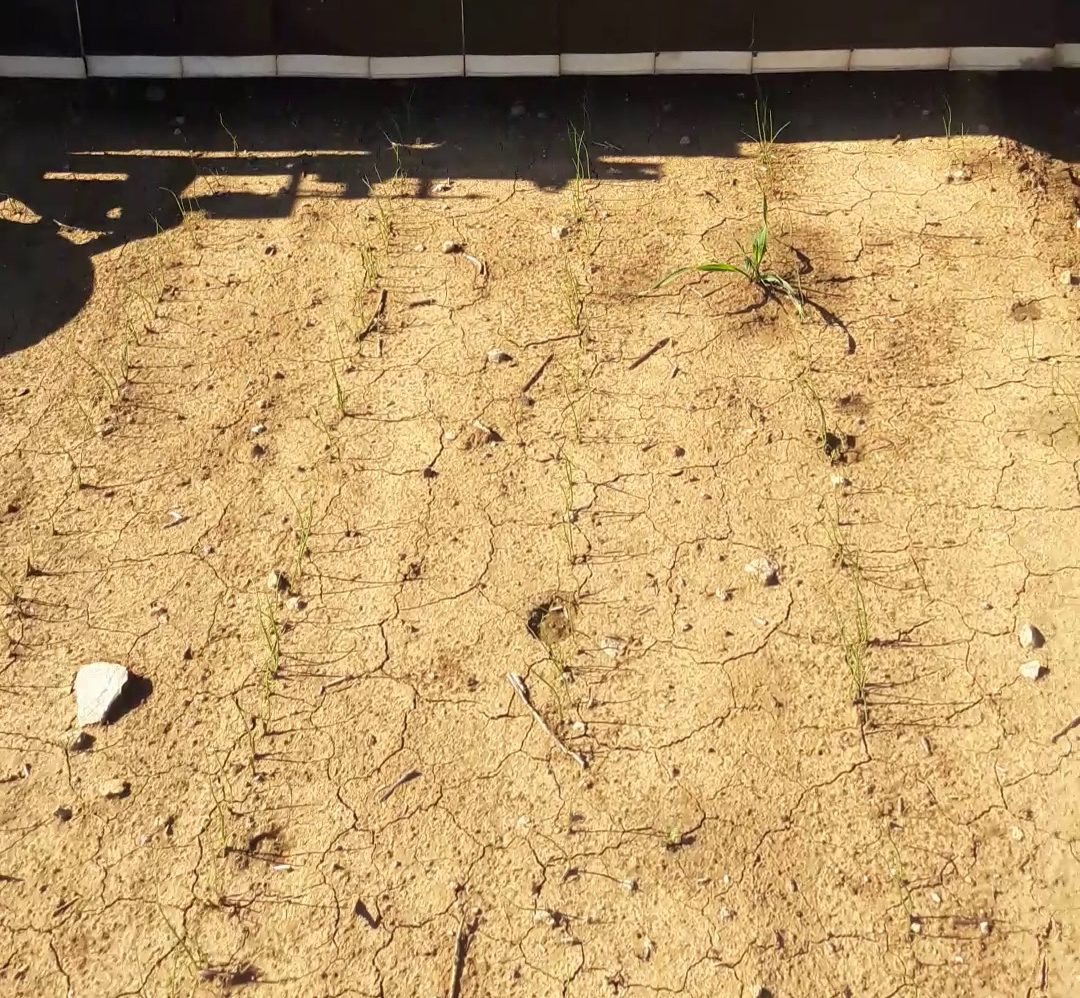
If you look closely, you can see some weeds are really small, just germinated. Still, they were detected. On the other hand, no corn crop was wrongly identified as a weed.
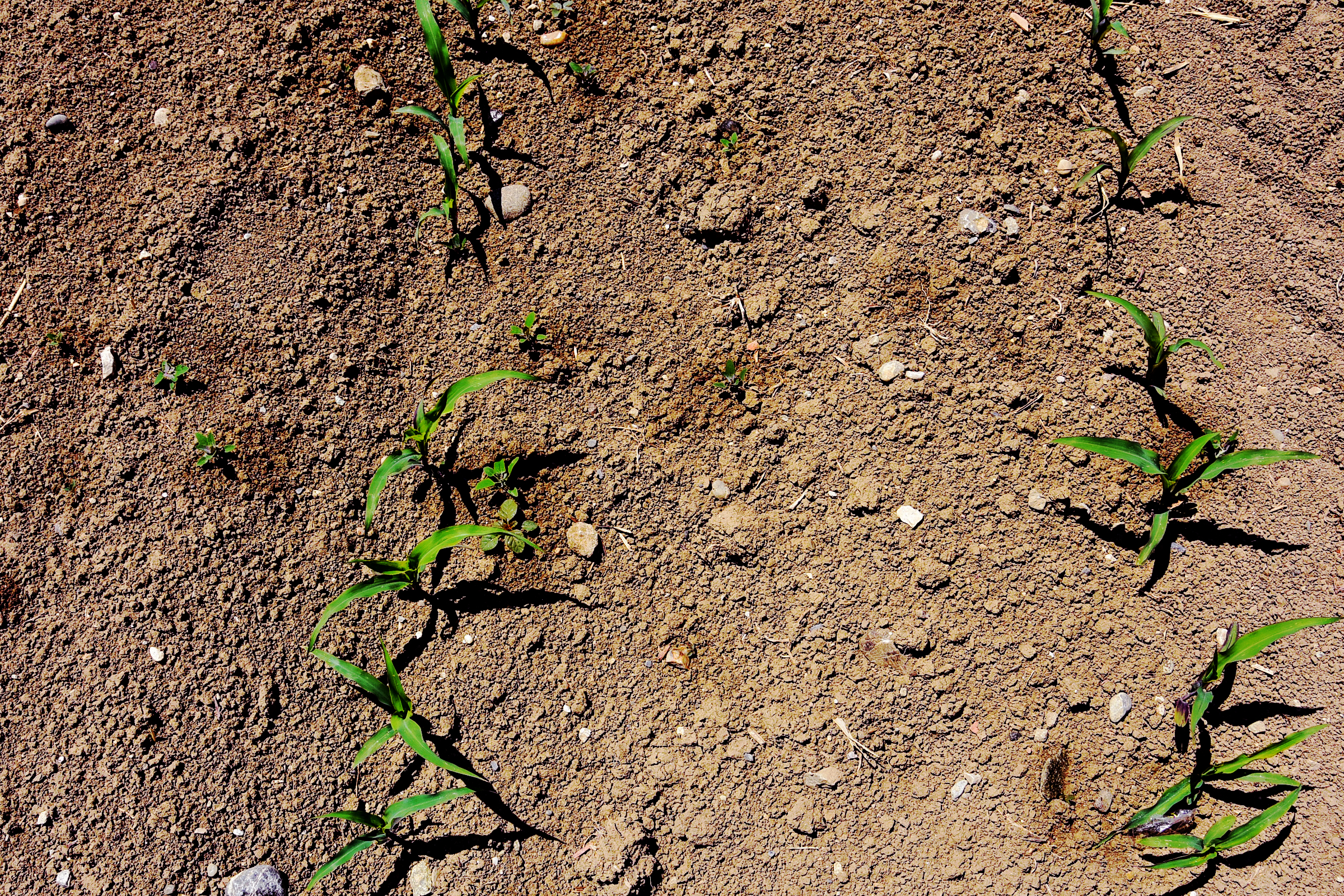
So this test achieved very good results. They make us confident we’ll be able to get the system on the market by 2023 as planned.
Ultra-precise spraying
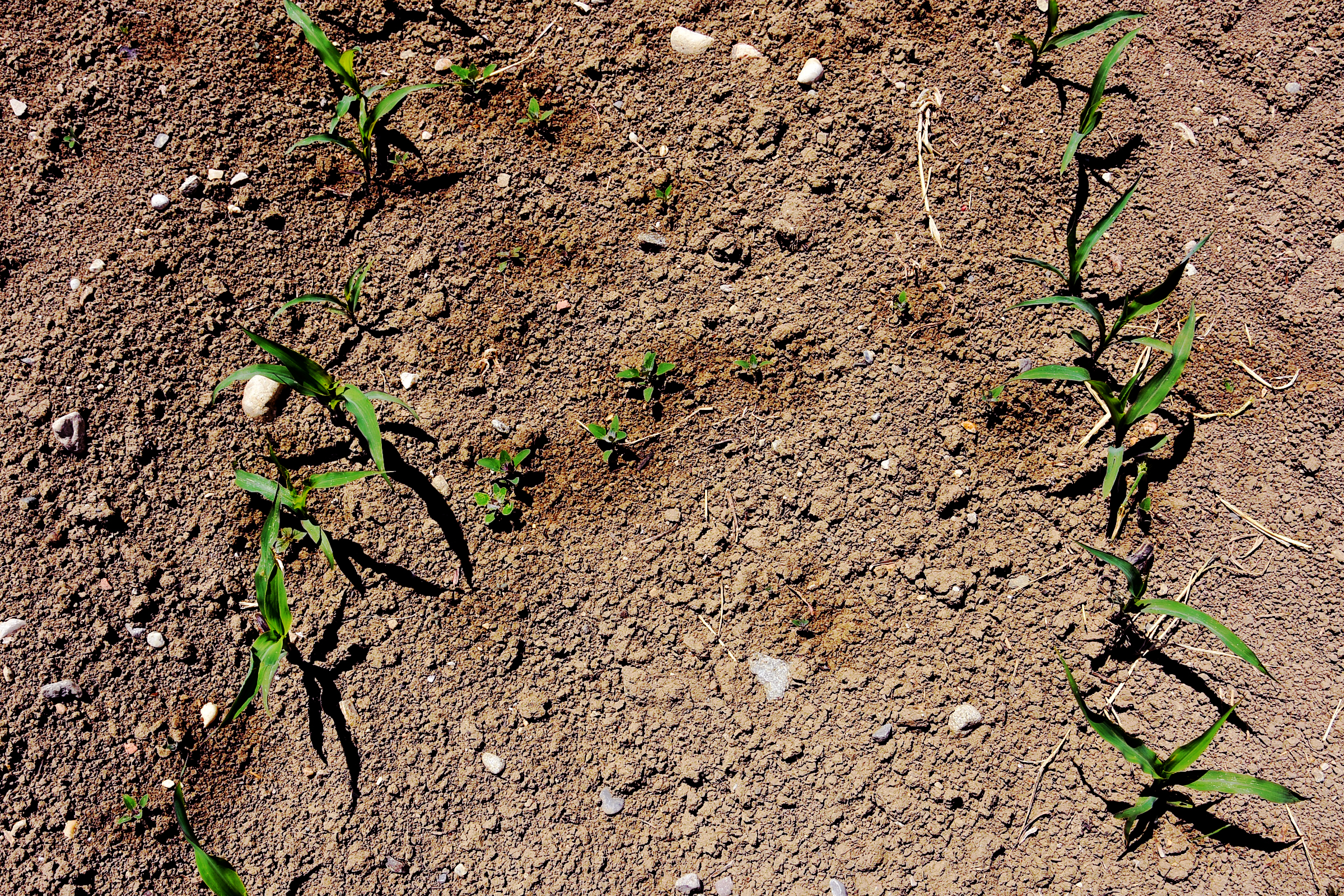
Thanks to the number and accuracy of the nozzles, ARA is able to spray the herbicide in an ultra-localised way, up to a precision of 6 x 6 cm. When you take a closer look on the sprayed areas, you can notice dark spots looking like a QR code on the soil. This is how accurate the spraying is. It allows to target weeds that are very close to corn crops without touching them, which eventually leads to reduced harvest phytotoxicity.
So even if the farmer has no other choice than to use non- or semi-selective products, the targeted spraying of this product won’t harm the crops. Its growth won’t be affected. So on top of reducing phytotoxicity, using ARA also improves the yield of the field. And we all know situations like this will become more frequent as the range of phytosanitary products is shrinking every year.
Reduced usage of phytosanitary products
Since ARA only sprays what needs to be sprayed and nothing else, it spares phytosanitary usage. On similar crops, the decrease reaches 70% to 80%.
With a conventional sprayer, a farmer typically uses around 200 litres per hectare. On the other hand, ARA only uses 40 to 50 litres to treat the same area. Of course, these are average numbers: they can vary depending on the actual weed pressure on any given field.
«With our system, there’s a spectacular decrease in the usage of plant protection product, since ARA only sprays what needs to be sprayed – and nothing else.»
Loïc Wüthrich, technical sales engineer at Ecorobotix
ARA’s efficiency in cornfields: the numbers
- Decrease in plant protection product usage: 70-80%
- Detection rate: 95%
- Treatment rate: 95%
The onion algorithm by Ecorobitx has been on the market as a fully functional product for 2 years. It’s being used by a number of farmers across Europe, mainly in Italy, France, and Switzerland of course.
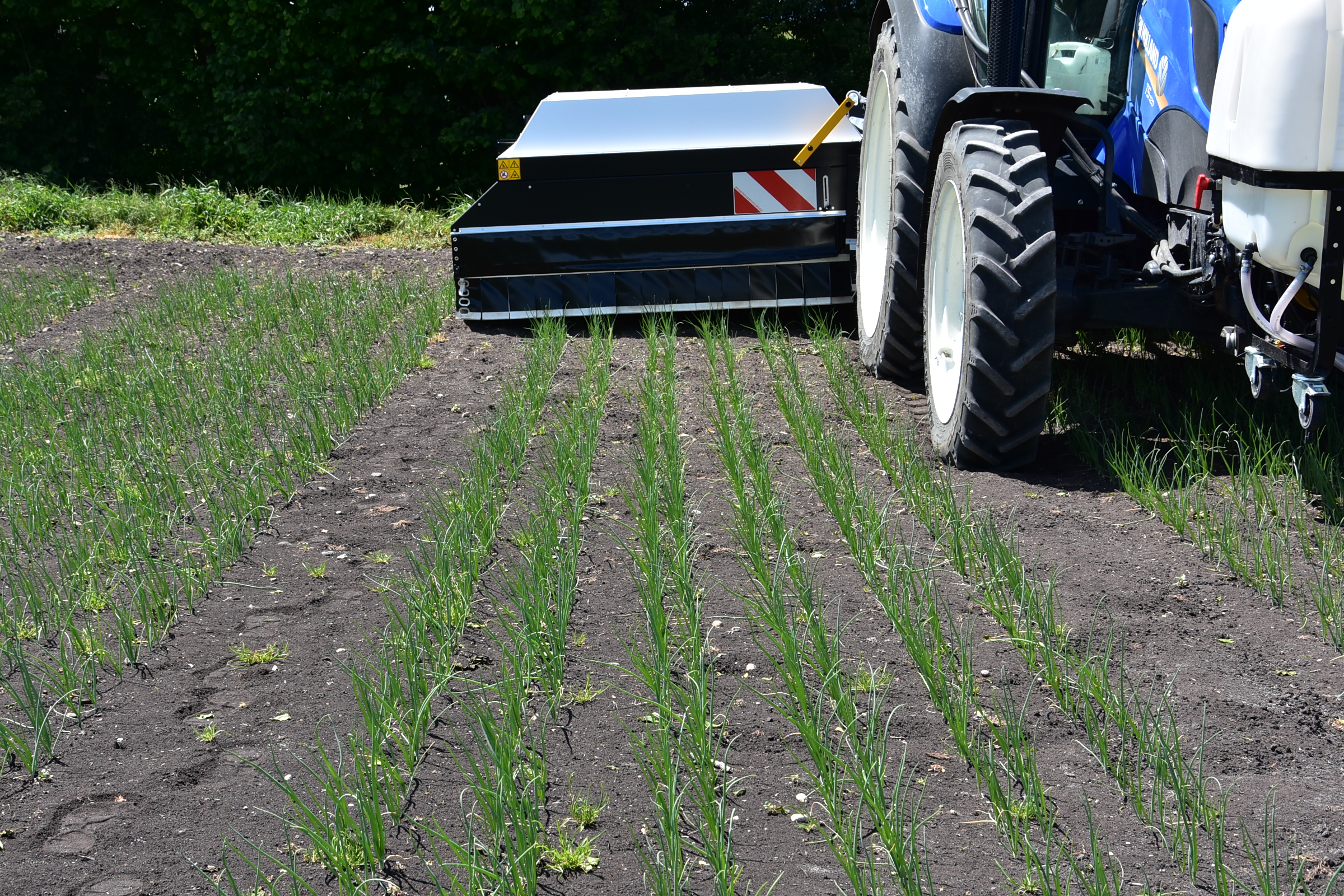
This demonstration was organised on the Egger & Sons estate in Chavornay (Switzerland). We used ARA to spray a selective herbicide targeting weeds such as broadleaf and grassy weeds. Up to 7.5 km/h, weeds are successfully detected by the camera and sprayed by the machine.
Video of the test run
Efficient detection system
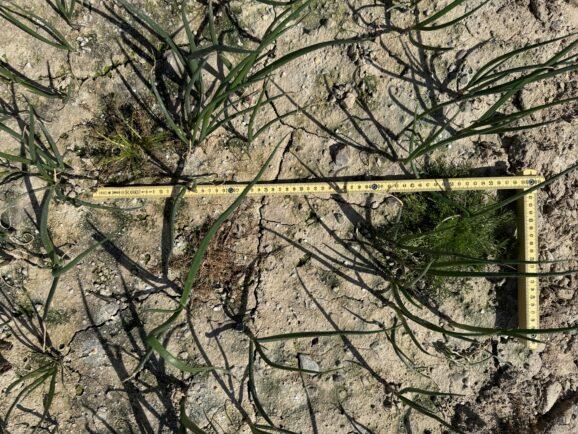
The visual recognition system detects weeds, whatever their development stage. In the video, you can see that weeds are identified even at a very early stage: just after germination, when they’re still at the seedling stage, they're recognised by the typical shape of the cotyledons and the two first leaves.
What you can also see in this video is that no weed is ignored. Even more, no onion bulb is wrongly identified as a weed.
Our algorithm also detects weeds when they are located close to or even on the onion plant. The mix of shapes and colours doesn't trump our visual recognition system.
Ultra-high precision spraying
Being able to spray up to an accuracy of 6 x 6 cm, ARA can treat even the weeds that are very close to the onion bulbs without affecting them.
Since ARA only sprays what needs to be sprayed and nothing else, it uses a lot less plant protection product. On onion crops, the decrease in product usage is around 70% to 80%.
«With ARA, even a non-selective plant protection product becomes selective, because it’s sprayed in an ultra-targeted way, only where it needs to be.»
Loïc Wüthrich, technical sales engineer at Ecorobotix
For all seasons and soils
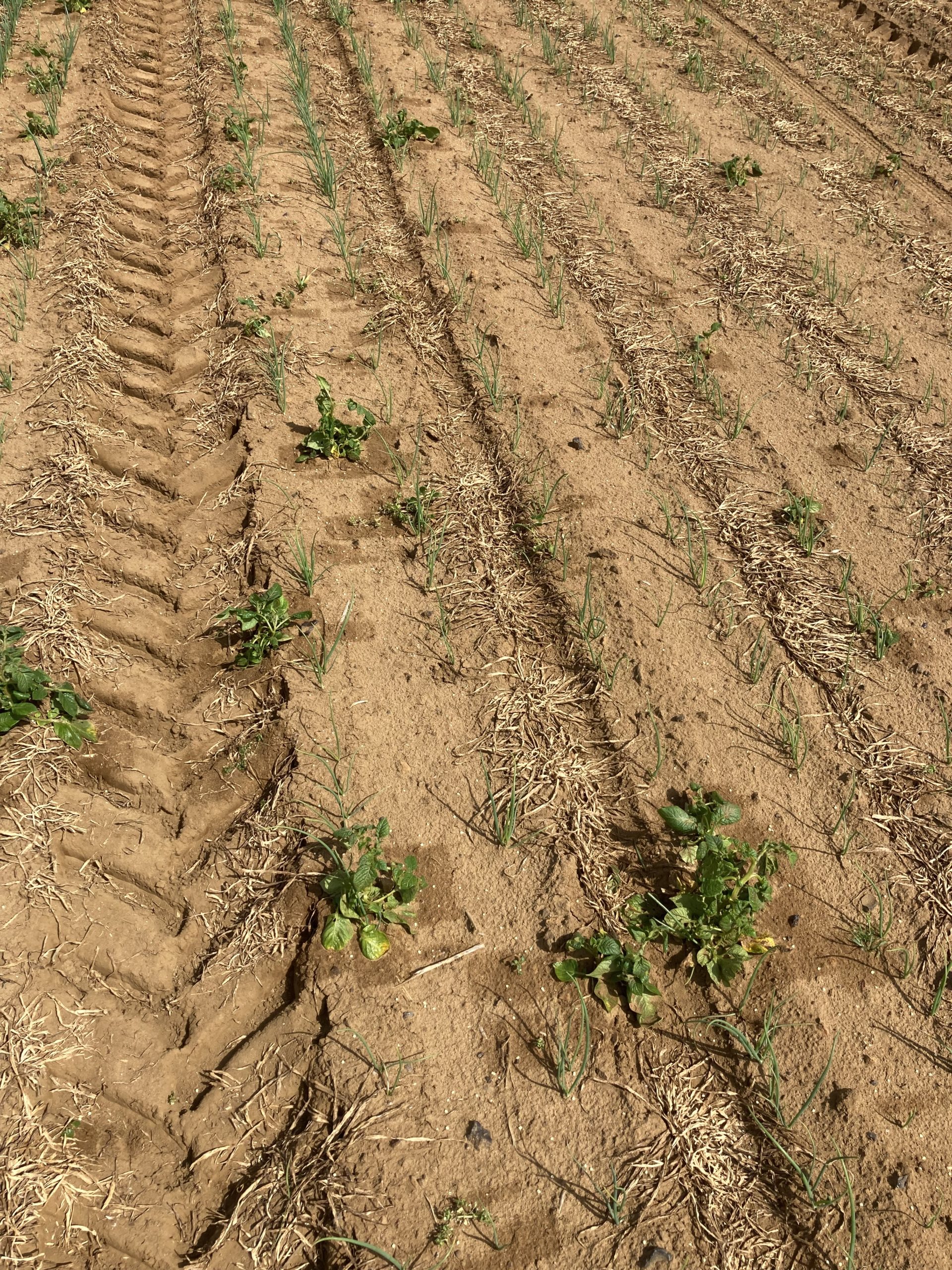
The onion algorithm is one of the most comprehensive and versatile of the Ecorobotix product range. The first reason is that there are spring and summer onion varieties and they will fight different weeds depending on the season. So we had to train the visual recognition system to identify all these various weeds, at every development stage.
Also, onion can be grown on many different kinds of soils. In the Orbe plain in Switzerland, onion is grown in very dark and peaty soils. In Loiret (France) however, our partner Groupe Méthivier has run a number of tests on lighter-coloured, mineral soils. In the Rhine plains, some farms have very diverse terrain, where you can switch from black soil in some areas to lighter tones a few yards away. So we had to train our algorithm to work on various soils so it can be efficient on all farms.
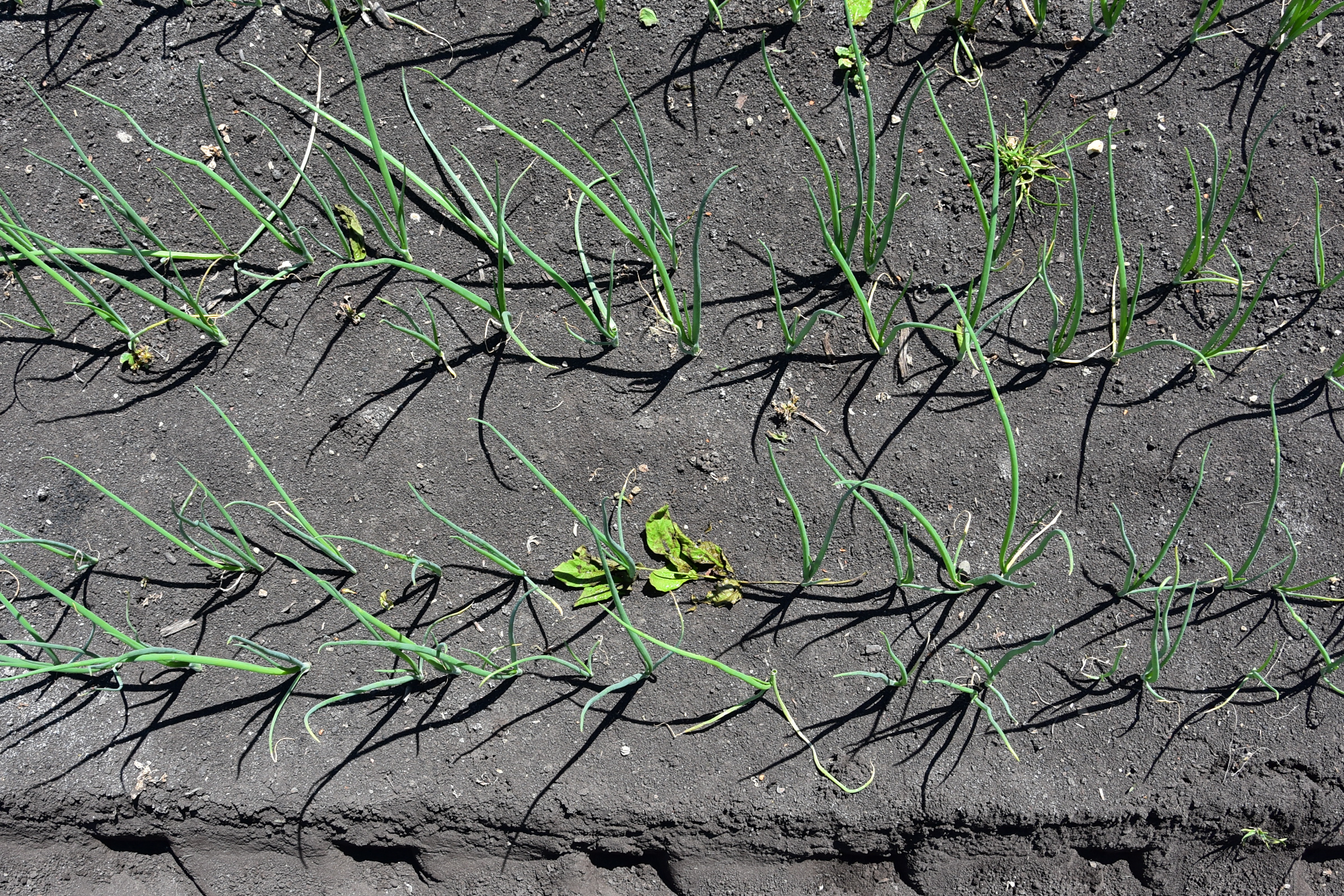
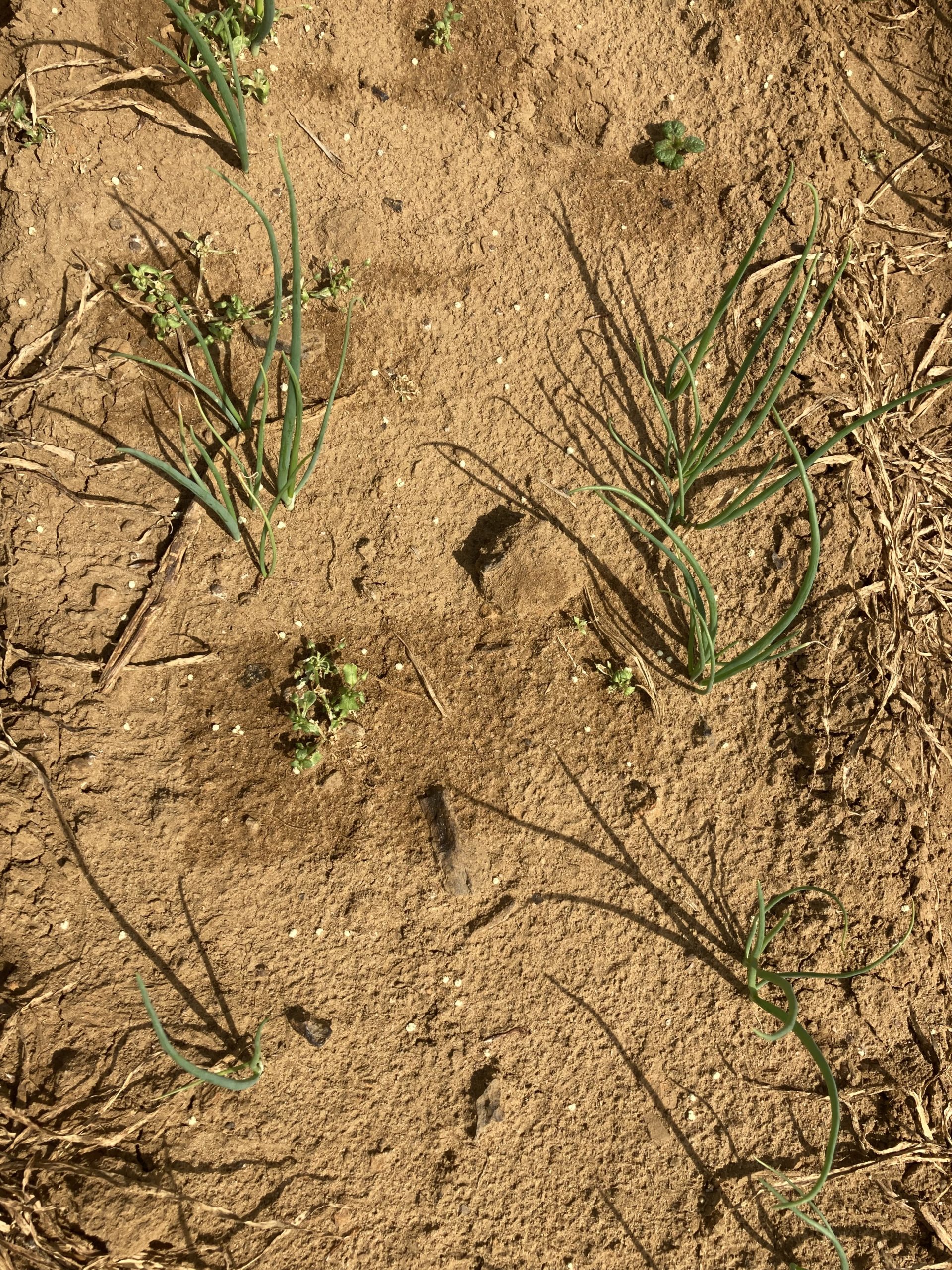
The demanding tests we run with our team have shown that our detection models are robust. They work fine, whatever the season or the colour of the soil.
ARA’s efficiency in cornfields: the numbers
- 46 litres of plant protection blend by hectare
- Detection rate: 95%
- Treatment rate: 95%
- Ecorobotix tested its ultra-high precision ARA sprayer, based on artificial intelligence, on an onion plot in Loiret, in collaboration with La Coopérative Beauce Champagne Oignon (BCO).
- Tests show promising results, with a reduction of up to 93% in the TFI (Phytosanitary Treatment Frequency Indicator).
Yverdon-les-Bains, Switzerland, 31st January 2022. This autumn, Ecorobotix, a start-up offering ultra-high precision farming solutions tested its ARA smart towed sprayer on an onion crop plot in Loiret (France). The results are promising and allow the volume of product used to be reduced, compared to a conventional weed control solution.
Promising results: a precise and economical technology
The test was carried out by La Coopérative BCO and the Loiret Chamber of Agriculture, as part of the Club Oignon Régional Centre Val de Loire, with financial assistance from the Centre-Val de Loire region.
Two treatment sessions spaced apart by seven days were carried out and have helped to highlight the following:
- The precision and effectiveness of ARA in targeting plants, measured by using methylene blue on the crop. Ecorobotix’s technology makes it possible, thanks to its integrated artificial vision, to classify the plants and to adjust watering by ultra-short jets up to an accuracy of 8x3cm.
- The effective reduction of 93% in the TFI (Phytosanitary Treatments Frequency Indicator) compared to the volume of product used with a conventional weeding technique on another section of the plot.
Therefore, the ARA sprayer offers producers and farmers many advantages over other types of weed control processes: a decrease in the quantity of chemical products used, a high reduction of residue and phytotoxicity on crops and fewer losses.
"I voluntarily accepted the proposal to test a new method, which allowed me to reduce the use of phytosanitary products. The subject is of utmost importance for our business since, logically, the TFIs determine whether the High Environmental Value certification and other seals of approval can be achieved. The test is conclusive regarding this aspect and we await to see the next production and the impact on the yield obtained, as the control of products can only have a beneficial effect on the quality of the harvest. We want to continue the experiment on other larger crops."
Damien Jamet, farmer member of La Coopérative BCO.
About La Coopérative B.C.O
La Coopérative Beauce Champagne Oignon (B.C.O) specialises in producing, packaging and commercialising onions, garlic, shallots and echalion shallots. It brings together 55 producers/members over a surface area of 650 hectares, spread across three production areas: the regions of Centre-Val de Loire (Loiret), Île-de-France and Grand Est (Champagne/Ardennes).
In order to meet the expectations of its clients in terms of products, the new Semaises site, opened in 2018, brings together the most advanced technologies in Europe. Optical sorters and infrared cameras to study onions bulb-by-bulb and to determine the most appropriate use for consumption. A 100% automated flow management.
Therefore, B.C.O relies on its 50 years of experience in production and is a major player in the agro-ecological transition in this sector: preserving soils, restoring biodiversity, plant health and reducing synthetic inputs.
Today, La Coopérative B.C.O has 45 employees, produces 30,000 tons of onions a year and has a storage capacity of 10,000 tons for a long-term supply.
Press Contact
Isabelle Aeschlimann
Communication officer Ecorobotix
media@ecorobotix.com
- Ecorobotix and Eureden have carried out tests of the ARA weeding sprayer under real conditions during summer 2021 over more than 40 hectares of beans in the region of Pontivy (France).
- Eureden, a co-operative agribusiness group in Brittany, and Ecorobotix, a designer and manufacturer of artificial intelligence-based, ultra-high precision sprayers, have been partners on vegetable crops since 2017.
- The results are promising with a reduction of 70% on average of using crop protection products and a good controlling of weeds on the plots treated.
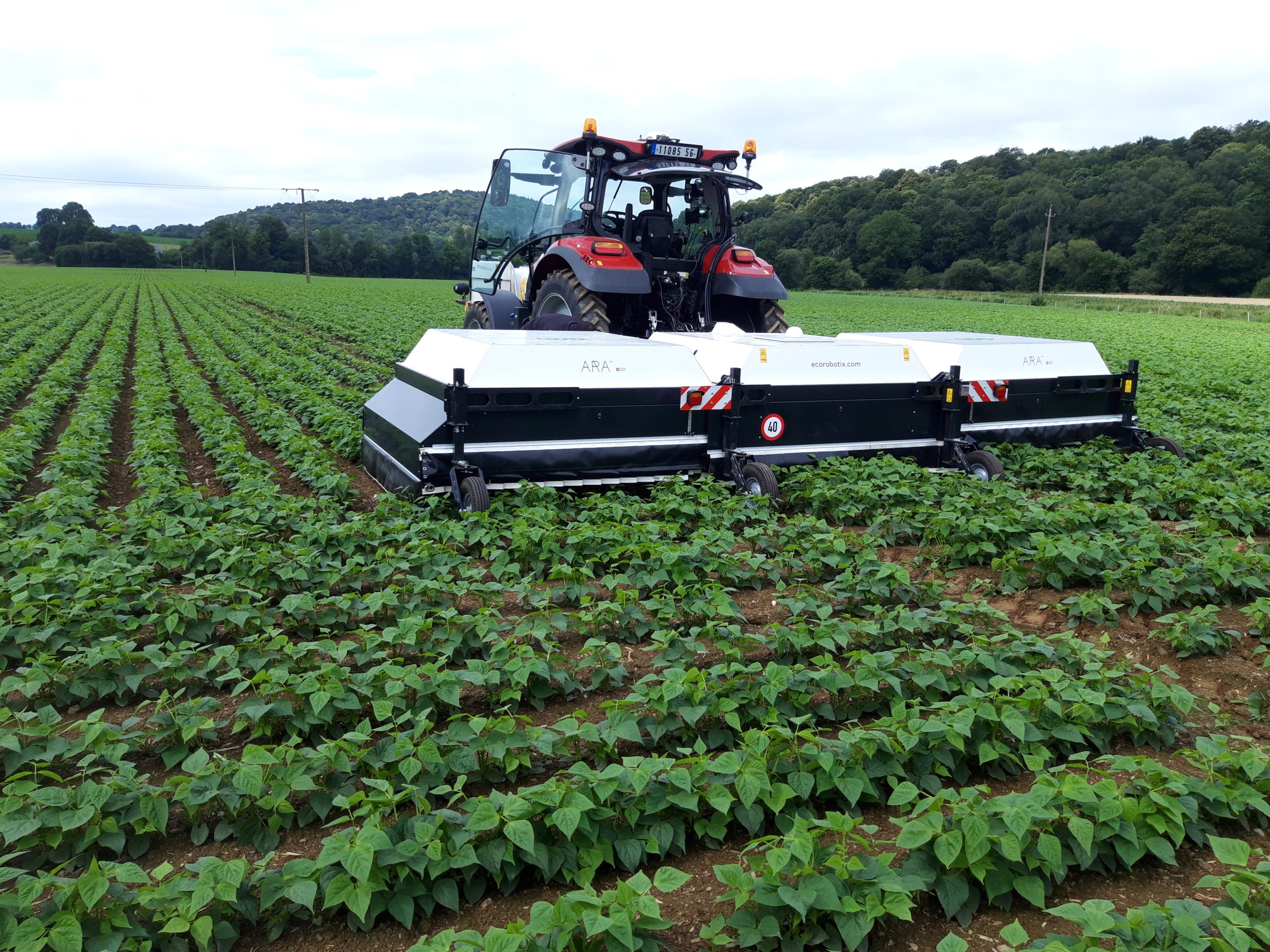
Yverdon-les-Bains, Switzerland, 2 December 2021. Ecorobotix carried out tests with the ARA sprayer over more than 40 hectares of beans in partnership with Eureden’s vegetable business. The results demonstrate a reduction of 70% on average of using crop protection products over the area treated, while allowing for a normal harvesting and recovery of crops.
ARA’s artificial intelligence, in response to farmers’ problems
ARA is a high-precision sprayer which allows for a targeted application of herbicides, fungicides, insecticides or fertilisers for an ecological and economical treatment of row crops (beetroot, colza, potato sprouts, corn, soya, etc.), open field vegetables (beans, onions, lettuce, spinach, etc.), grasslands and intercrops. Ecorobotix’s patented technology allows high-resolution images of plants to be captured. These images are then analysed by the computer embedded in the sprayer in order to classify these plants. After analysis and identification, the targets are watered by ultra-short jets, up to a precision of 8x3cm. Ecorobotix thus operates artificial intelligence technology to favour the transition to more sustainable farming, which is more respectful of the environment, while enabling farmers to make savings.
The ARA sprayer offers producers and farmers numerous advantages over other types of weeding methods: a decrease in the quantity of chemical products used, high reduction in residue and phytotoxicity on crops, improved yield depending on the crop.
Results demonstrating a technology which is precise and effective on beans
The tests with ARA were carried out between mid-July and mid-August 2021 in Pontivy (France) over ten fields of beans, totalling more than 40 hectares.
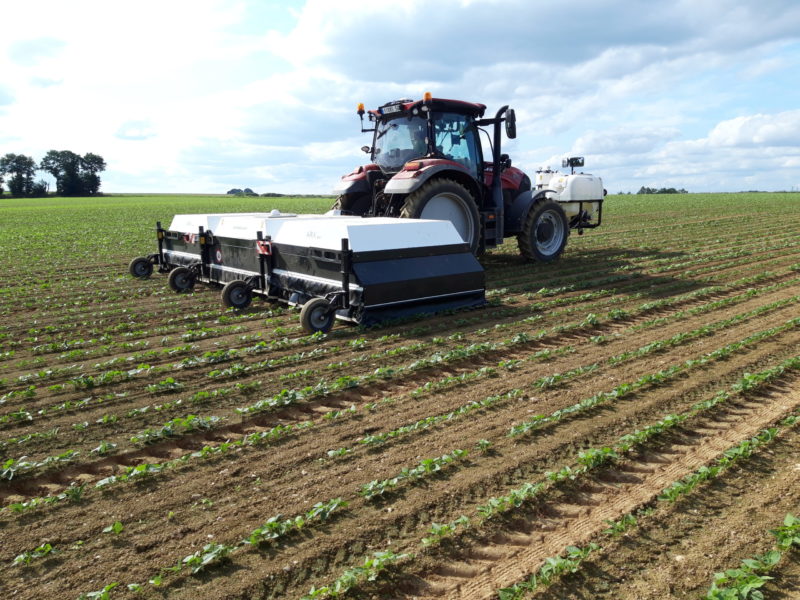
Eureden carried out a comparative test on each plot, by treating one area with ARA and another area with a full-fledged treatment.
This difference in treatment has resulted in the following conclusions:
- Reduction in quantities of active materials used of 70%, with up to 85% reduction of the area treated.
- Destruction of 95% of weeds over the areas treated, which complies with conventional technical methods, and enables a normal mechanised harvest and industrial recovery.
- Identical quantity harvested, even with a decrease of 70% of product used. There is no unwelcome competition from the weeds.
After these first substantial results, Eureden will work on a model that will be rolled out on a large scale which will be used on beans, and the partnership with Ecorobotix will be extended through new tests of the ARA sprayer on different crops.
"We started the partnership with Ecorobotix several years ago, as we spotted a potential for greatly reducing the use of herbicides, while maintaining a good level of effectiveness in the context of our vegetable subsidiary. Precise targeting, including in rows, of the seedlings of undesirable weeds, sometimes problematic for the end consumer, is an interesting response. The results obtained this year are really satisfying after several years of working together: they pave the way to a new approach with weeding as regards our vegetable crops. We can combine our agroecological ambition of reducing crop protection products and a satisfactory effectiveness in terms of agronomical success and food safety. It is now about developing a large-scale rollout, in line with the economic model."
Julien Prat, Deputy Manager Vegetables Industry, Eureden group.
About the Eureden group
The co-operative group from Brittany, Eureden, brings together 20,000 co-operative farmers and 9,000 collaborators around one common ambition: healthy eating for all, with the ongoing concern of responding to the expectations of consumers and of society.
The Eureden group is composed of 6 branches (Farming, Eggs, Meat, Frozen Food, Long Life and Green Distribution) and has 60 industrial sites, 300 stores intended for cooperative farmers and the general public, as well as a portfolio of strong brands such as D’aucy, Jean Nicolas, Globus, Paysan Breton, Cocotine, Aubret, Point Vert and Magasin Vert.
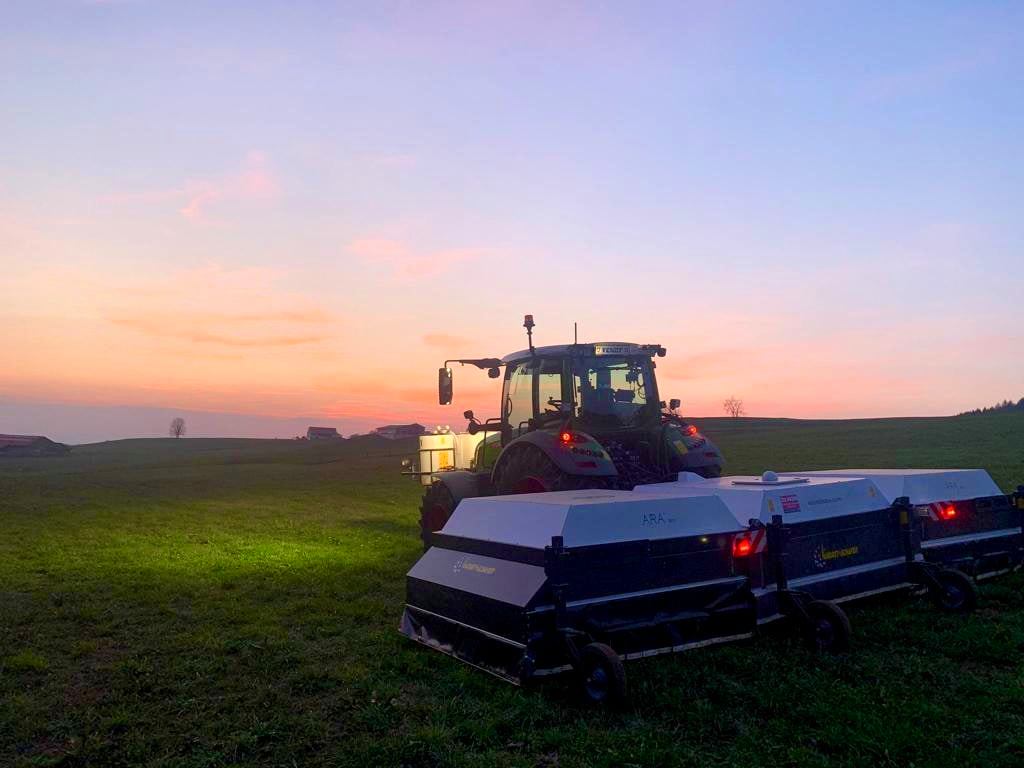
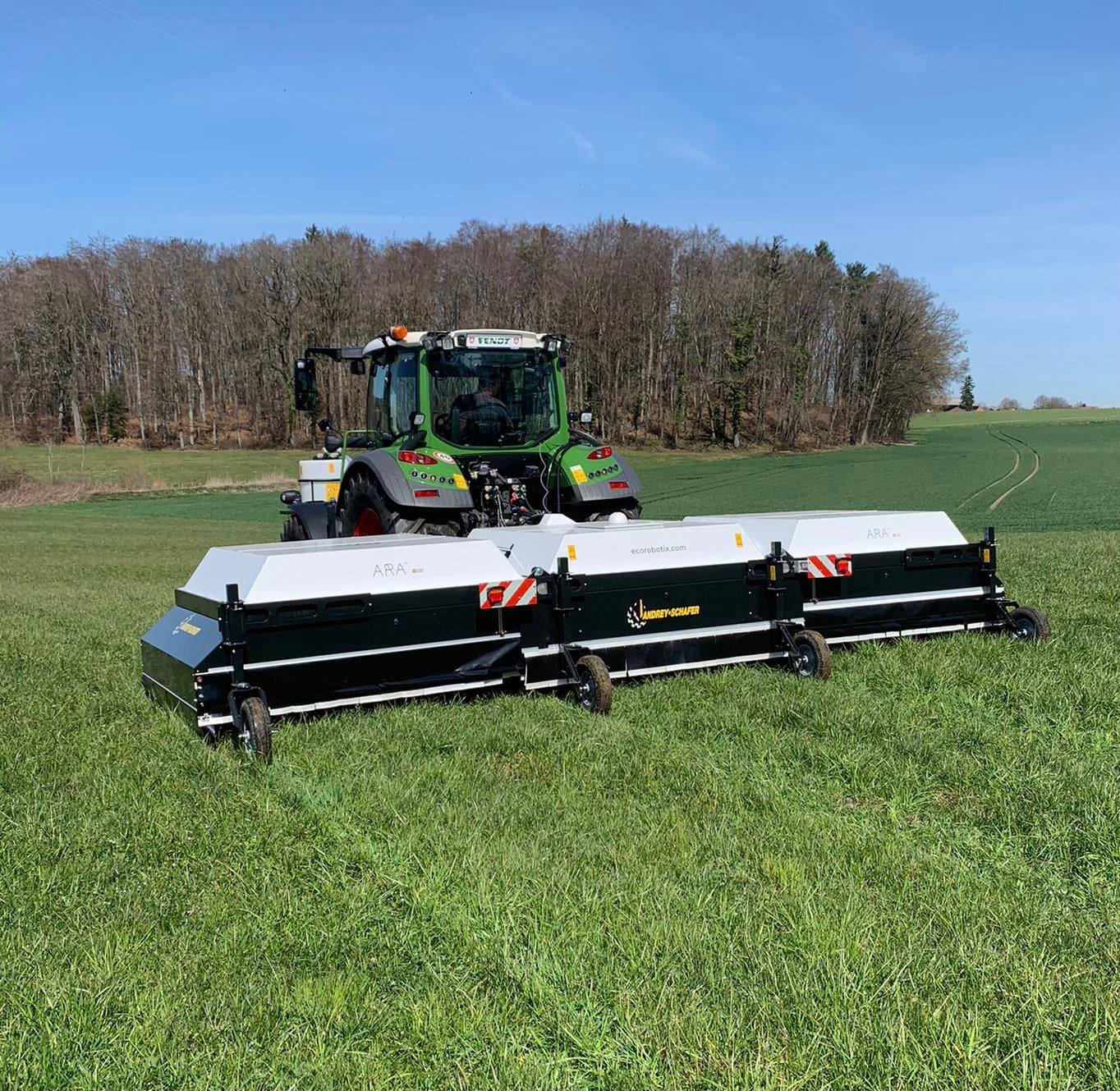
Since March and depending on the weather, several of our ARA spraying robots have been working in the fields of Switzerland. The first users were Thomas Estermann AG, an agricultural contractor in the Lucerne region,Andrey & Schafer Entreprise de travaux agricoles SA, an agricultural services company based in the canton of Fribourg, the fenaco-LANDI group and their new technological platform Innovagri and, of course, our official distributor for French- and German-speaking Switzerland, the Precision Centre of the Bucher Landtechnik Group.
We were very happy to receive the feedback from these privileged users and their beautiful photos on social networks! There are tough times ahead for Mr Rumex! He’s got to watch out. ARA is coming to the countryside!
Here we share with you the first feedback from our experiences in the field. Here we are! After years of development, testing and discussions with the farmers who helped develop the ARA spraying robot, our technology is ready to take on the weeds and care for the crops.Gilles Besançon - First impressions after the treatment and the results three weeks later
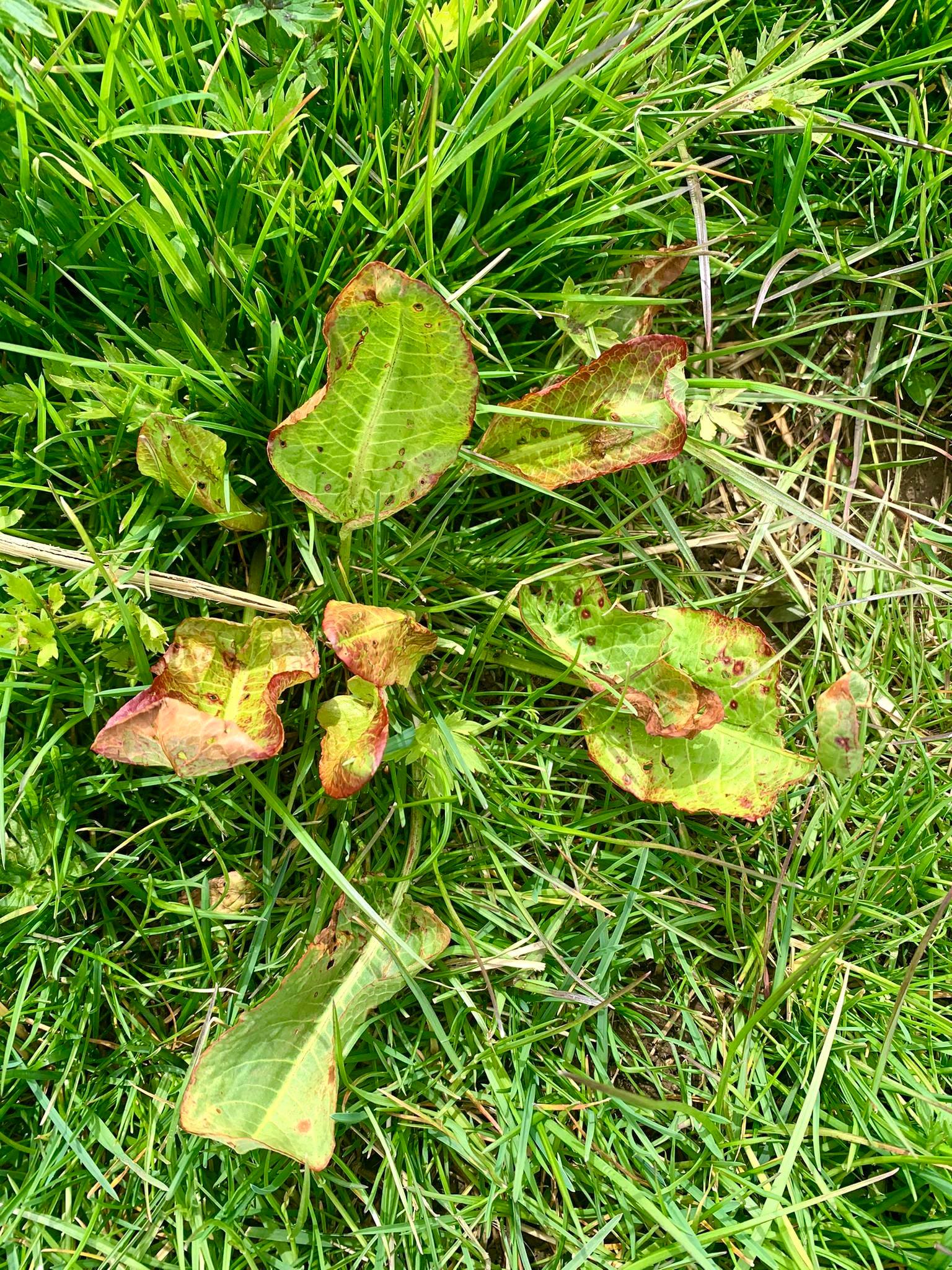
Video 1: At the end of March 2021, an ARA was busy in the fields of Mr Bezançon, a farmer in Goumoëns-la-Ville, spraying only the Rumex.
Video 2: Three weeks later, we went to see the results and were pleased to discover concrete proof of the effectiveness of the precision spraying! Only the Rumex was affected, and it is dying.
The reality in the field and testimonies
An example of feedback from the agricultural services company Andrey & Schafer SA in Fribourg, dated 30 April:
"The #ARA_sprayer, our new spraying technology, has been in operation with our customers for a few weeks now and the feedback has been beyond our expectations! Many customers wanted to test it on a few hectares first, only to call us back 10 days 95%, and the results are still impressive. Many thanks to our customers, who trusted us. We are delighted to be one of only 4 owners of this machine in Switzerland! Congratulations to ecoRobotix for this invention, which is great for agriculture and the environment."