

Weeding is at the heart of farming practices as weed directly compete with crop for resources, slow down the harvest process and negatively affect yield and its quality. To date, growers are dependent on a bunch of molecules, certified and compatible with a particular crop. Recently, concerns about the effects of plant protection products on human health and the environment have led to a significant reduction in the number of herbicide molecules available to European growers. Though unwavering, this shift toward more sustainable farming practices creates huge challenges and raises concerns about growers’ ability to maintain effective weed control in their crops.
In 2024, the European Commission announced the withdrawal of metribuzin, a key molecule commonly used by carrot growers, with a grace period expired in November 2025. Prior to this deadline, Ecorobotix agronomists have addressed this issue and tested an effective weeding program using alternative molecules to metribuzin for the 2025 carrot season.
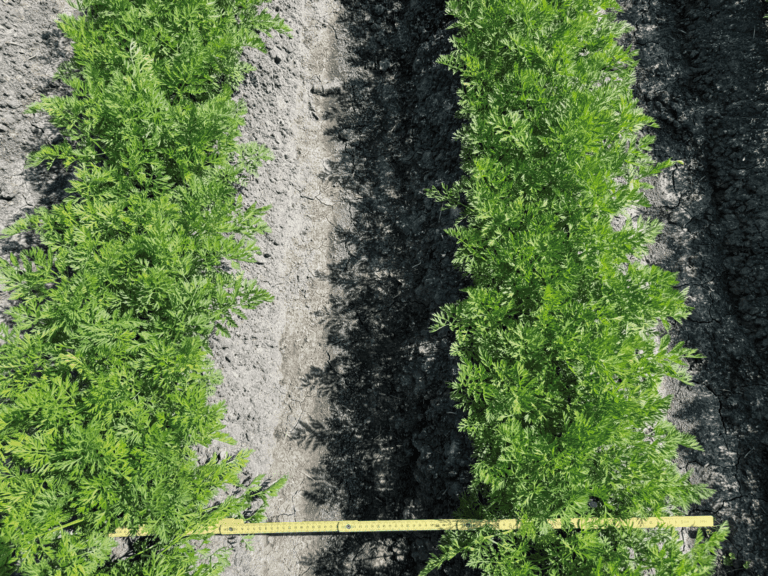
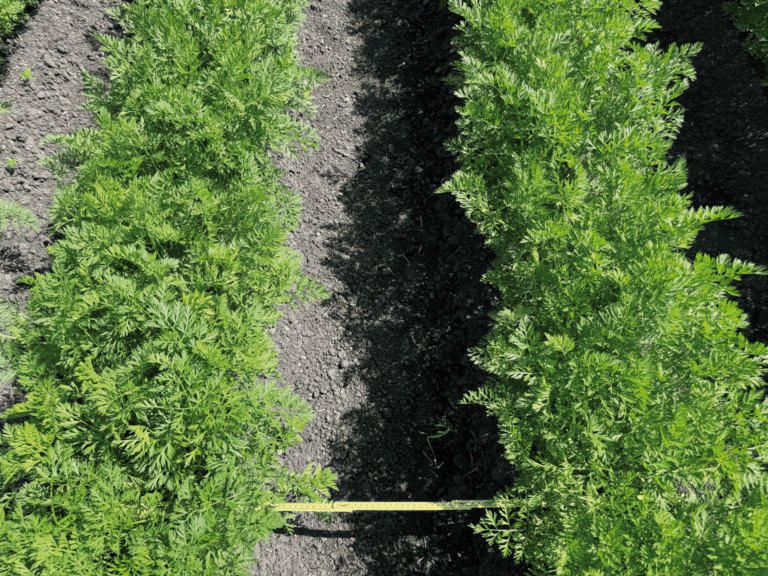
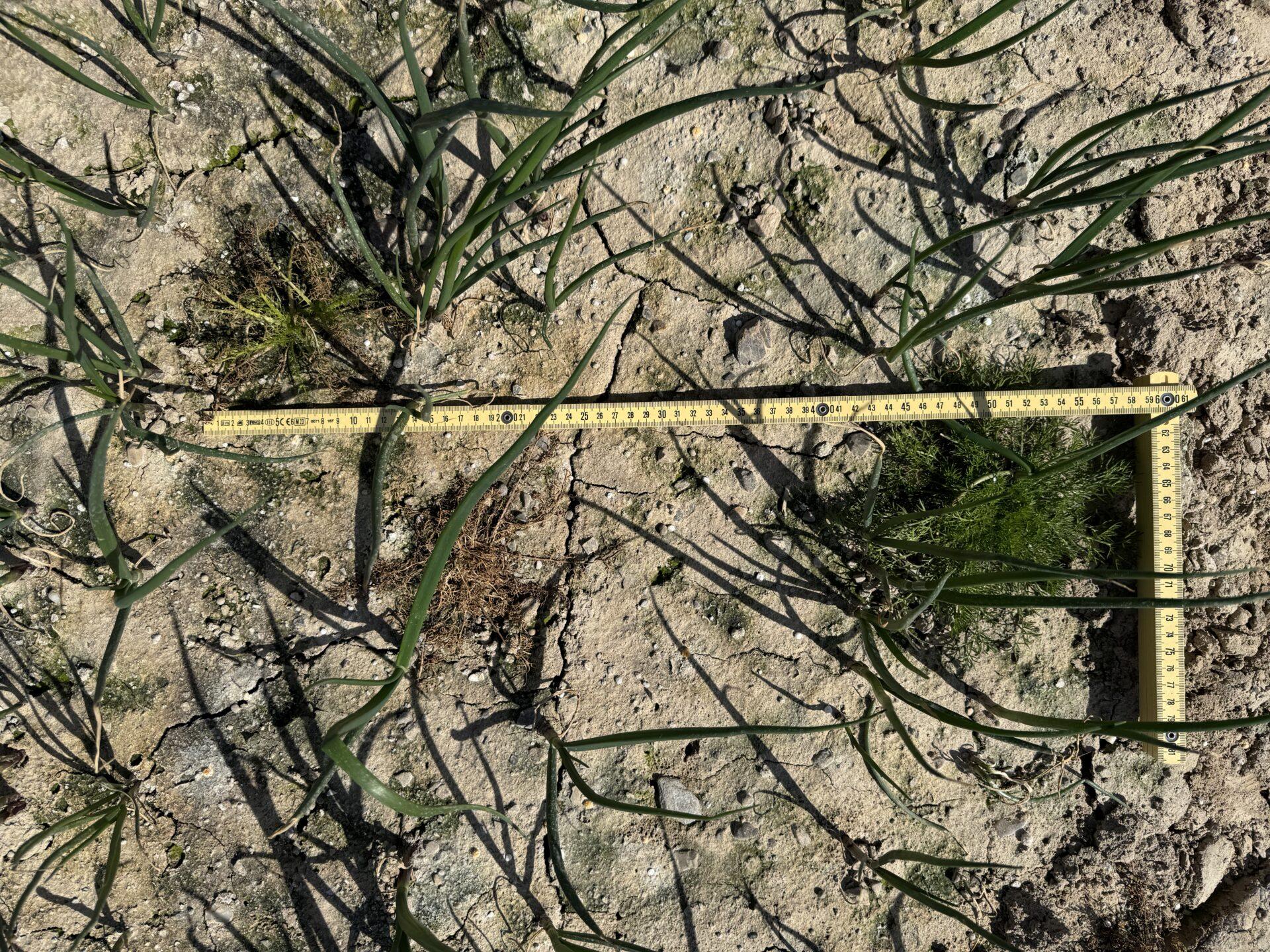
ARA modality produced more biomass as shown by the anticipated closure of the rows compared to the farmer reference (broadcast). ARA treatment: all weeds, no security zone, semi-selective mixture.
On a context of high weed pressure (multiple waves of weed germination), the plant-by-plantTM weeding by ultra-high precision (UHP) spot-sprayer ARA was very efficient in weeding up to stage 5 leaves of the crop, despite not using metribuzin molecule. After that stage, carrots created a canopy over new emerging weeds such as chenopodium and amaranthus. Those weeds are particularly difficult to control because they can germinate and grow despite low light intakes. Those hidden weeds were not seen by ARA’s cameras, not detected by artificial intelligence and obviously not sprayed. The new challenge now is to combine the ARA solution with other weeding solutions for late germinating weeds after that critical point of 5 leaves and keep weed control all through the season. Nevertheless, the spot spraying application of chemicals (5 paths including a broadcast pre-emergence treatment) reduced the volume of herbicides by 80% percent compared to a full spray equivalent. Moreover, the rows closed faster in ARA modality compared to farmer’s reference, suggesting higher biomass production. Indeed, yield quantification shows that ARA modality tends to provide higher yield compared to the conventional modality reference by 10%, showing phytotoxicity induced by herbicides negatively affects production. Strikingly, the same protocol combining pendimethalin, clomazone, aclonifen, pyridate, prosulfocarb and clethodim was applied later in the season in another field with a slightly delayed planting date. At harvest, weed pressure from chenopodium and amaranthus was lower compared to the first trial, likely due to different germination dynamics. Observations showed that the ARA maintained effective weed control throughout the trial. This demonstrates that a slight delay in planting can be an effective agronomic lever to reduce weed pressure.
Through such trials, agronomists at Ecorobotix come up with alternative technical itineraries to conventional solutions using the ARA UHP technology in combination with effective mixtures, maximizing yield potential and leveraging sustainable farming.
The limits of synthetic herbicides
Since the 20th century, synthetic herbicides have become key tools in weed management strategies, providing important economic and operational benefits. Along with other agricultural inputs, herbicides contributed to the increase in agricultural productivity over the past decades.
However, the intensive use of herbicides has led to several adverse effects. The over and repeated use of substances with the same mode of action leads to the development of resistant weeds, especially when low-diversity weed management strategies are employed. Herbicides also have both direct and indirect impacts on biodiversity, reducing habitat diversity for wildlife – including natural enemies of pests – and causing pollution-related harm to non-target organisms. Finally, agrochemicals can be harmful to human health through various routes of exposure, raising awareness among consumers.
For these reasons, the use of synthetic herbicides is increasingly regulated in some countries, while integrated weed management strategies are being promoted. As a result, there is a growing industry interest in identifying more sustainable options to synthetic herbicides. Natural-origin molecules are emerging as a powerful alternative, offering promising agronomic benefits with reduced impacts on health and the environment.
Bioherbicides: challenges and opportunities
Bioherbicides are a subset of biopesticides, typically derived from naturally occurring biological sources – such as microorganisms and plant extracts – or mineral sources (Cordeau et al. 2016). In contrast with pesticides made from synthetic molecules, biopesticides do not need to be synthesized as they use active ingredients already present in nature. The natural origin of some molecules does not eliminate environmental or toxicological risks – as illustrated by arsenic-based herbicides – highlighting the continued need for thorough risk assessment. Bioherbicides are underrepresented in biopesticides, with only a few products being commercially available. Their widespread adoption remains limited due to short shelf life, formulation instability, specific mode of action, inconsistent field performance, and high costs.
We present here an example of bioherbicides that remain underused and whose adoption could be facilitated through Ecorobotix’s UHP technology.
Fatty acids
Herbicidal fatty acids, naturally extracted from plant oils, are non-selective herbicides applied to plant leaves after weeds have emerged. They work by drying out the plants and quickly burning them down. Different molecules – pelargonic, capric and caprylic acids – are registered in several countries, including in the European Union. These biobased herbicides are increasingly used to eliminate weeds from gardens, lawns, golf courses, parks, walkways, roads, and industrial sites. However, their use in farming is still scarce due to their high cost per unit combined with the higher recommended doses (Ciriminna et al. 2019; Loddo et al. 2023). Fatty acids are known for their low environmental toxicity, even under field conditions (European Food Safety Authority (EFSA) et al. 2021).
The herbicidal activity of fatty acids is most effective against broadleaf weeds during their early growth stages (Pannacci et al. 2022). Research shows that weed control can be improved by using different strategies, such as applying treatments several times at short intervals during the season or mixing the product with an adjuvant or another herbicide. (e.g., an essential oil).
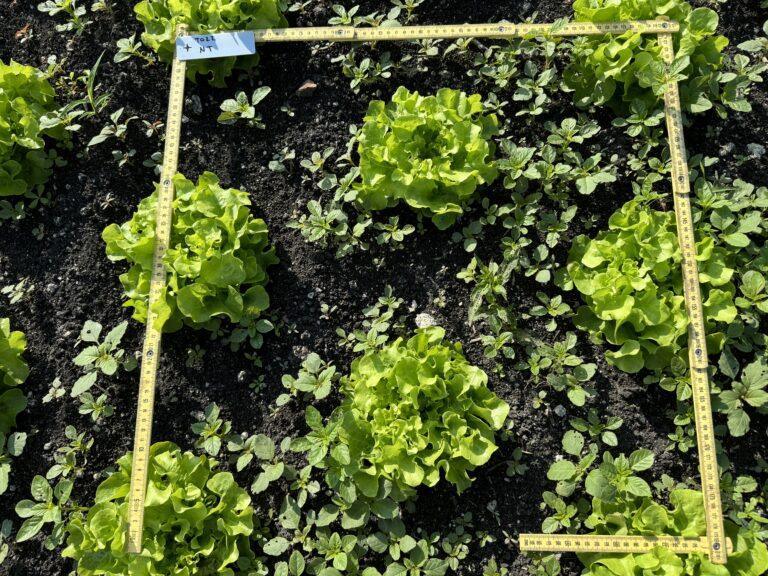
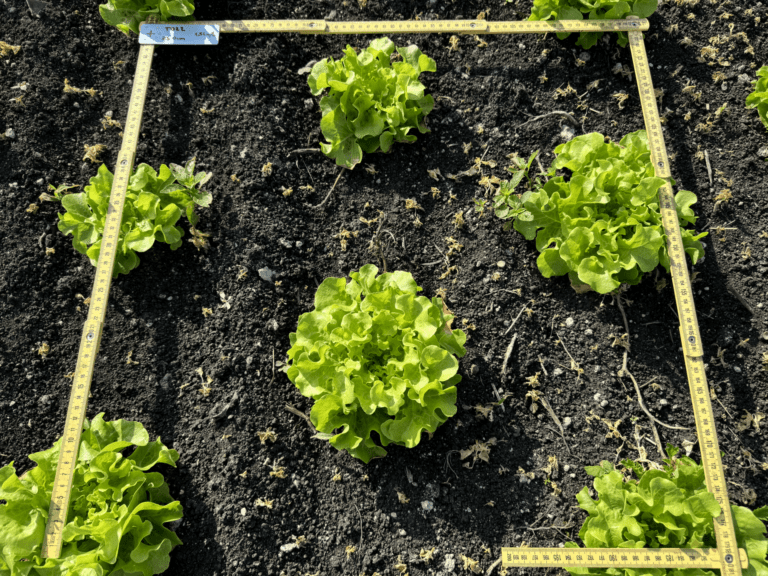
One step further with Ecorobotix’s UHP
Ecorobotix’s Ultra-High Precision (UHP) spraying enables a major step forward in the use of bioherbicides. By targeting individual weeds, UHP makes it possible to apply non-selective molecules – such as fatty acids – in post-emergence while drastically reducing spray volume and therefore costs. Because their modes of action differ from those of synthetic herbicides, these solutions provide conventional producers with new options to combat herbicide-resistant weeds. UHP also creates potential synergies with mechanical weeding: bioherbicidal agents can support early weed control when in-crop mechanical operations are too risky, while follow-up applications after a rotary hoe or tine weeder can suppress later-emerging cohorts (Cordeau et al. 2016). In some countries, bioherbicides are registered for organic farming, offering new strategies to reduce weed pressure, limit tillage, and improve farm profitability.
In conclusion, the combination of bioherbicides with UHP spraying offers a highly promising approach within integrated weed management, effectively merging sustainability, safety, and agronomic performance.
References
Ciriminna R, Fidalgo A, Ilharco LM, Pagliaro M (2019) Herbicides based on pelargonic acid: Herbicides of the bioeconomy. Biofuels Bioprod Biorefining 13:1476–1482. https://doi.org/10.1002/bbb.2046
Cordeau S, Triolet M, Wayman S, et al (2016) Bioherbicides: Dead in the water? A review of the existing products for integrated weed management. Crop Prot 87:44–49. https://doi.org/10.1016/j.cropro.2016.04.016
European Food Safety Authority (EFSA), Alvarez F, Arena M, et al (2021) Peer review of the pesticide risk assessment of the active substance pelargonic acid (nonanoic acid). EFSA J 19:. https://doi.org/10.2903/j.efsa.2021.6813
Loddo D, Jagarapu KK, Strati E, et al (2023) Assessing Herbicide Efficacy of Pelargonic Acid on Several Weed Species. Agronomy 13:. https://doi.org/10.3390/agronomy13061511
Neal JC (2024) Biological Control of Weeds in turfgrass: opportunities and misconceptions. Pest Manag Sci 80:40–48. https://doi.org/10.1002/ps.7436
Pannacci E, Ottavini D, Onofri A, Tei F (2022) Dose–response curves of pelargonic acid against summer and winter weeds in Central Italy. Agronomy 12:3229
This highlights the improvements that were needed for the model.
Winter onions are typically sown from mid-August to September in lowland areas and mild climates and develop two to three leaves before the onset of cold. Most weeds do not survive low temperatures, although some species persist over winter. Mayweed or groundsel, for example, often overwinter in the rosette stage and resumes growth early in spring when temperature rises. Therefore, weed control in fall is essential as mayweed and groundsel become difficult to fight using conventional solutions after their winter growth.
Ecorobotix offers an effective solution to control weeds surviving winter. The ARA ultra-high-precision (UHP) spot sprayer uses the Plant-by-Plant AI™ weeding technology to apply specific and effective dose of herbicides to fight big problematic weeds. This is particularly true in Switzerland, Germany, France, England and the Netherlands for well-established groundsel, where growers face a lack of selective molecule options.
Set up with a security zone, the ARA UHP spot sprayer can sharply apply a non-selective contact herbicide on groundsel intertwined with onions without affecting the crop development but breaking groundsel expansion.
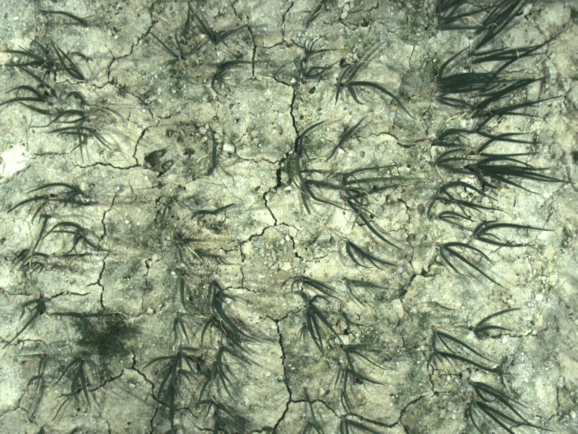
Original image
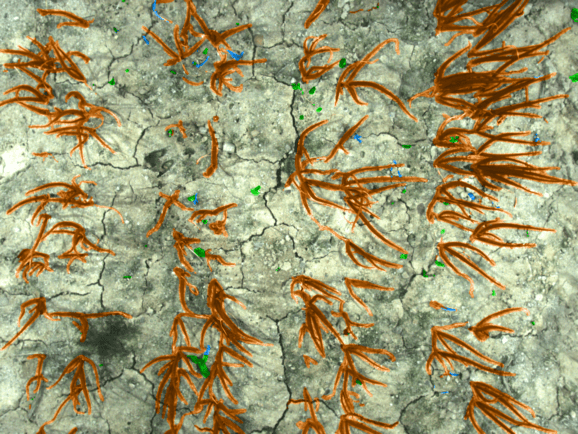
Recognition results from the old model algorithm: Mayweed not recognized
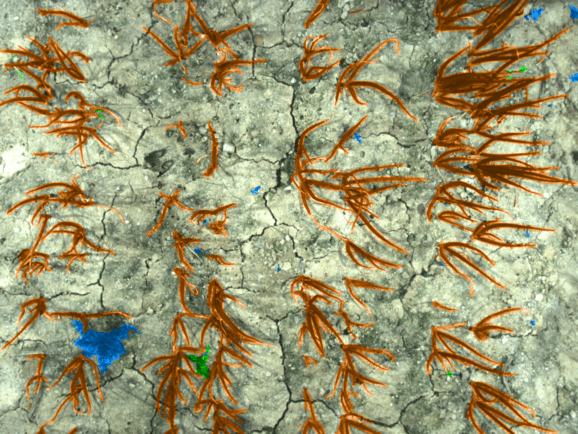
Recognition results from the new model algorithm: Mayweed recognized
Interestingly, client feedback from 2025 brought up some defects in mayweeds recognition. This issue was tackled during the off season, and the mayweed detection was improved and implemented for an updated onion algorithm for 2026. This shows the agility of the onboard software powered weeders, their constant evolution and how much feedback from our customers is crucial to keep improving our product.
By combining early-season intervention with ultra-high-precision application, the ARA UHP spot sprayer provides an efficient and targeted solution to manage problematic weeds that survive winter in onion crops. It is particularly well suited to situations where autumn treatments were not possible or effective due to weather constraints, limited time windows, or reduced control efficacy. Ecorobotix Plant-by-Plant AI™ technology helps growers to significantly reduce weed pressure in early spring, optimize herbicide use, while protecting crop development and addresses the limits of conventional weed control strategies.
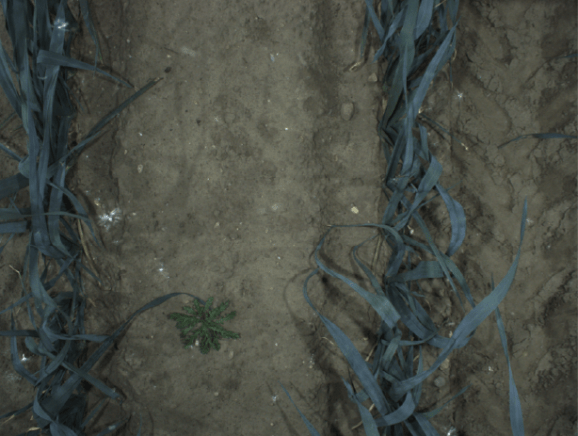
(a) Raw Image, RGB acquisition in leeks

(b) Green-on-Brown in red: all plants are targeted
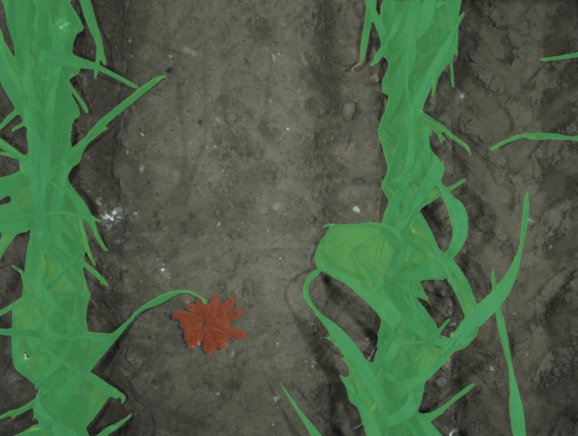
(c) Green-on-Green: only weed is targeted (in red), crop is protected (in green)
Nowadays, artificial intelligence (AI) is at the core of farm management, from fertilization recommendations to concrete weeding solutions. Ecorobotix has revolutionized crop care by bringing very advanced technology into the field. The company offers the ultra-high precision (UHP) spot sprayer ARA, and its value is built on AI, precision, and the exact definition of the spray spot applied to the target.
ARA is not a simple sprayer. It applies plant protection products only where they are needed, and this process is driven by AI. ARA is equipped with cameras that capture live images of the field. These images are analyzed and processed by AI. Because the contrast between green plants and brown soil is high, it is relatively easy to classify each pixel as either green or brown. The resulting segmented image becomes a binary mask of green and brown pixels. This corresponds to a map where each green pixel is sprayed. This is known as green-on-brown algorithm technology. It can be used, for example, to control weeds on fallow land or before sowing. The main advantage is significant chemical savings.
To further reduce spray volumes, Ecorobotix has added a target-size feature to this all-green algorithm. This allows the operator to focus only on a specific size range of weeds that may be difficult to control with standard mixtures. A clever way to use this feature is to define a size threshold between weeds and the crop. This is especially useful in transplanted crops where no dedicated algorithm is available yet. In these cases, the size difference between transplanted crops and weeds is large enough that the threshold is easy to set. The operator can then target only green spots smaller than a defined size (and targets the weeds) within the green cover made up of larger transplanted plants and weeds.
The pinnacle of weed control, however, is green-on-green technology. Within the green pixels, the AI can distinguish weeds from crops, not only based on size but also on leaf shape, texture, position and number, as well as green shading. This technology relies on machine learning and dedicated algorithms trained for specific crops. In simple terms, field images are manually labeled plant by plant and classified as either weeds or crops. The raw image and the expected result are then provided to a computer, which identifies features and combinations of features to build patterns that allow it to recognize and classify every object in the image. This inference step corresponds to the creation of the algorithm. This algorithm is then integrated into ARA’s onboard computer and can recognize weeds within the crop, in real time in the field, and apply inputs precisely where needed.
This technology opens new possibilities in weed control and overall food security. In essence, ARA’s capabilities in these two precision spraying technologies make it possible to minimize plant protection product use, phytotoxicity induced by herbicides, maximize profitability, and support environmental stewardship, marking a new era where technology and ecology work together for the benefit of the planet. Moreover, it aligns seamlessly with European regulations and global sustainability trends, offering an environmentally friendly solution without compromising effectiveness.
At Ecorobotix, we are dedicated to delivering cutting-edge precision spraying technology that empowers farmers to significantly reduce herbicide usage. Data from nearly 3,000 missions in onion fields using our ARA ultra-high precision sprayer reveals impressive results, with nearly 70% of all missions achieving herbicide savings of 80%, and some missions saving as much as 98%.
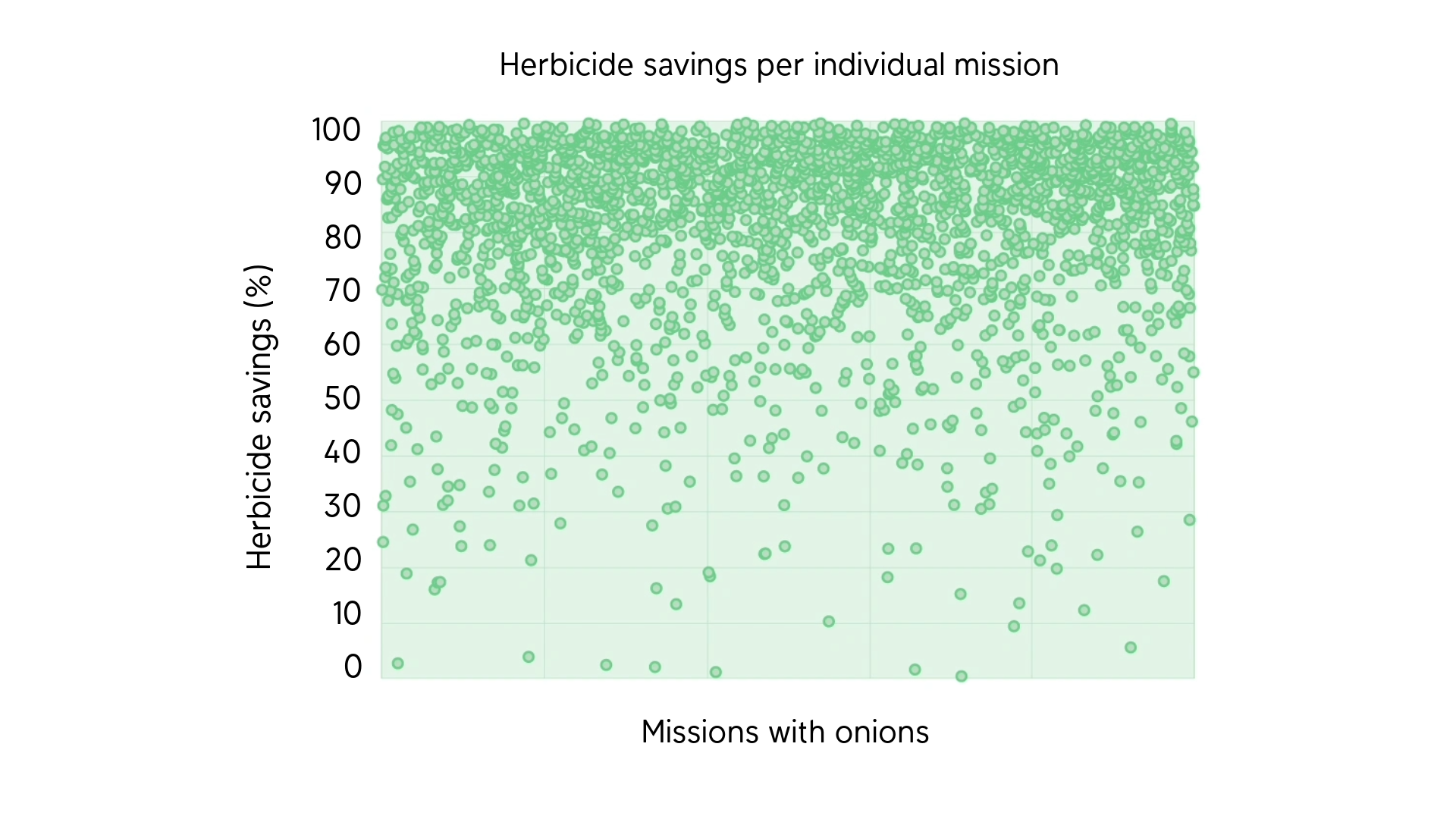
This graph shows the herbicide savings. Each dot represents a unique ARA sprayer mission, with the x-axis showing randomized onion missions and the y-axis indicating the percentage of herbicide savings, ranging from 0% to 100%.
One of the key takeaways is the consistency of these savings. Most missions demonstrate herbicide savings between 60% and 98%, with a significant concentration around the 80% mark (results depend on factors such as weed density and target type, including monocot and dicot weeds).
This data, collected from ARA sprayers deployed globally, highlights the machine’s ability to adapt to diverse field conditions.
By focusing only on the weeds and avoiding unnecessary spraying on healthy crops, ARA helps farmers reduce herbicide waste, minimizing both environmental impact and crop damage. As more farmers adopt precision agriculture, the advantages of using the ARA sprayer become even more evident. These substantial savings not only lower input costs but also contribute to more sustainable farming practices, making agriculture more eco-friendly across the globe.
Article Summary
Introduction:
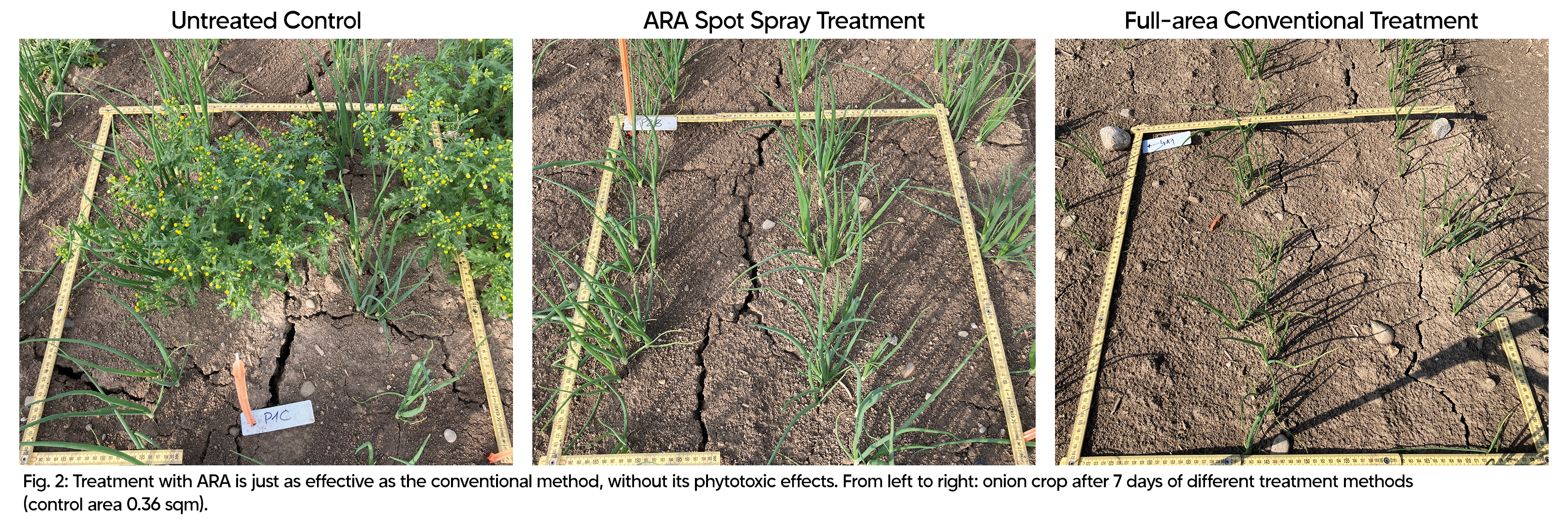
It is estimated that weeds are responsible for 34% of crop losses. Therefore, weed control is the greatest challenge in agriculture to ensure food security while maintaining high health and nutritional standards. The ARA precision field sprayer from Ecorobotix (Fig. 1 A) is an efficient solution for chemical weed control. ARA uses artificial intelligence and highly precise, localized spraying technology (Fig. 1 B) to effectively combat weeds while achieving higher yields. The study compares different weed control methods: an untreated control (NT), ARA with selective products, ARA with non-selective products, and broadcast spraying.
Results:
- In 2023, the ARA field sprayer saved over 78.9% of herbicide quantities in weed control for onion crops over 1 hectare compared to traditional broadcast treatments.
- ARA showed a global weed elimination efficacy of 92% compared to 99% for the broadcast treatment, with fewer applications (5 with ARA compared to 9 conventional) and simultaneously preserving the integrity of the crops (Fig.2).
- Weed control with ARA ensures higher yields per hectare (67 t/ha) compared to conventional application (43 t/ha) and untreated control (59 t/ha).
Summary:
In summary, ARA significantly contributes to environmental protection by drastically reducing the use of plant protection products in crops. By eliminating weeds and reducing the phytotoxic effects of chemical weed control agents, the potential of crops is maximized.
Download the entire study here
Revolutionizing the Use of Phytosanitary Products
Imagine a future where phytosanitary product usage in farming is slashed by 96%. This is no longer a dream but a reality, thanks to Ecorobotix's innovative precision spraying technology. The Vegetable Consultancy Services (VCS), a leading agronomy outfit in the UK, has reported incredible results using the ARA sprayer. As highlighted in Farmers Weekly, VCS has achieved up to 96% chemical savings across 1,000 hectares this year. This precise targeting technology not only minimizes product wastage but also shows a potential return on investment within just two to three years. Healthier crops, less disease, and higher yields are just a few of the possible benefits that come from these targeted treatments, revolutionizing field health and productivity.
Doorgrond's Success in the Netherlands
Meanwhile, in the Netherlands, Ecorobotix’s dealer Doorgrond has been setting records of their own. They have completed treatments across a staggering 15,000 hectares using the ARA sprayer, achieving up to 95% chemical savings. Doorgrond’s success story is built on a foundation of personalized service and tailored guidance, ensuring that every plot and crop receives the attention it needs.
Through the dedicated efforts of companies like Doorgrond and VCS, Ecorobotix's ARA sprayer is proving to be a pivotal tool in the evolution of precision farming, leading to more sustainable and productive agricultural practices.
About Doorgrond and VCS
Founded in 2019, Doorgrond makes precision farming accessible to agricultural entrepreneurs by introducing innovative techniques and providing personalized guidance. As an Ecorobotix dealer, Doorgrond supports the deployment of the ARA precision field sprayer in the Netherlands.
VCS (Vegetable Consultancy Services):
Established in 1996, VCS offers independent agronomy services in the UK and abroad. Their comprehensive farm support includes crop sampling, quality analysis, pest and disease monitoring, and yield prediction. VCS integrates the ARA sprayer into their operations, demonstrating its efficacy in reducing chemical use and improving crop management.
Three different procedures were utilized. The first approach entailed leaving the sugar beets untreated, allowing weeds to grow freely. The second, applying herbicides using a broadcast sprayer. Lastly, employing our ARA to precisely target and spray the weeds.
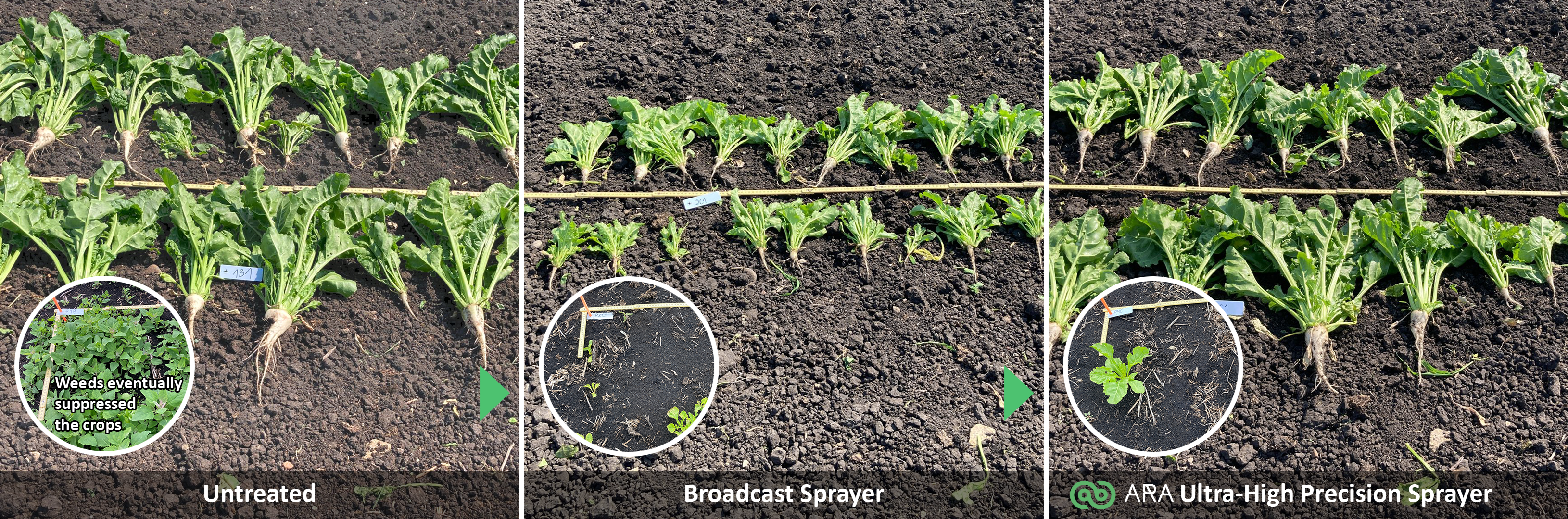
After a growth period of 10 weeks, it was concluded that ARA could successfully eliminate weeds and greatly reduce herbicide consumption by around 85% (compared to conventional broadcast spraying methods).
The untreated sugar beets exhibited satisfactory growth initially, but the excessive weed presence would have eventually overtaken and suppressed the crop. The utilization of ARA on sugar beets proved advantageous, leading to an almost twofold increase in crop biomass compared to broadcast spraying. This outcome strongly suggests the effectiveness of ARA's sugar beet algorithm in preserving the health and abundance of crops by mitigating phytotoxicity.
These results not only show potential economic advantages for farmers by enhancing crop yield through phytotoxicity suppression but also support the adoption of environmentally sustainable approaches.
Note: It's important to note that the results mentioned may not be representative of all situations and conditions. Local factors such as soil health, field history, herbicide choice, and growing conditions can influence the effectiveness of ARA. To further validate ARA’s capability, additional studies are currently underway, and results will be published later this year.
In a recent trial, the ARA was used to detect and spot-spray volunteer potato regrowth in an onion field. The survival potential of the regrowth was evaluated based on the presence or absence of green leaves 18 days after treatment. After just one pass with ARA, 79% of the regrowth was effectively eliminated, while the remaining 21% was damaged and very likely to die off in the next few days.
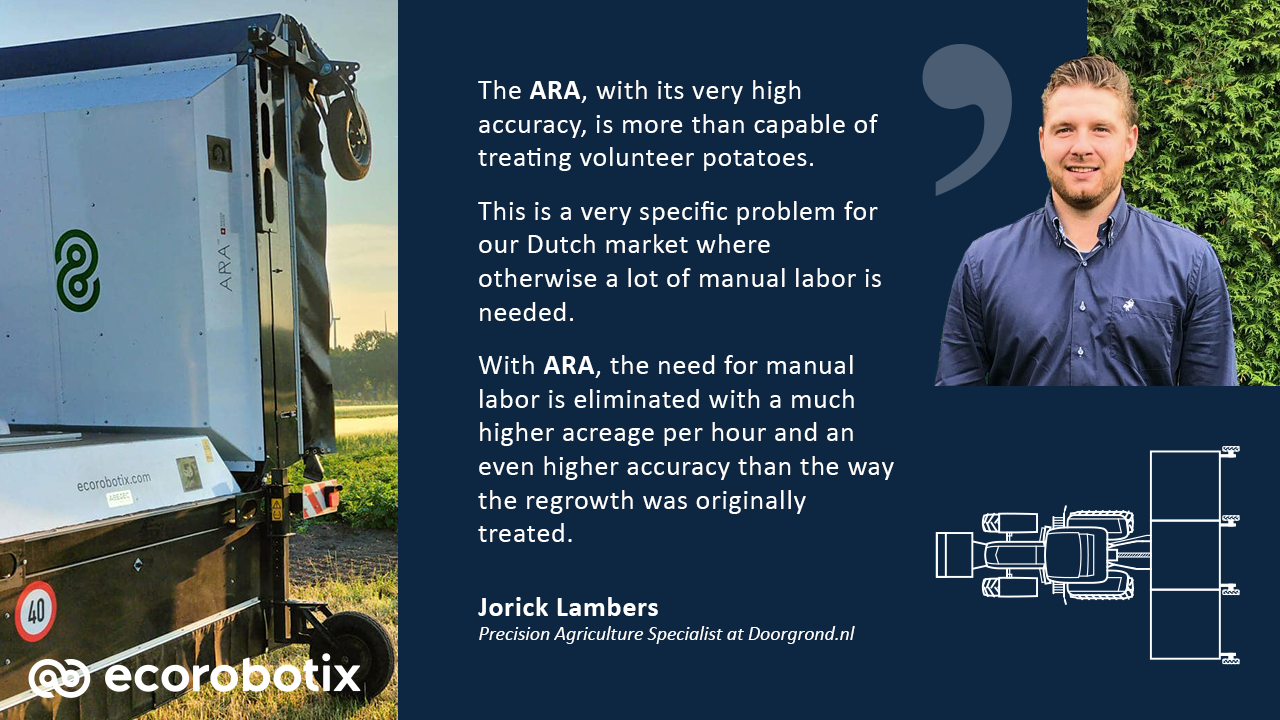
Many Ecorobotix clients have expressed satisfaction with the results achieved by ARA in treating volunteer potatoes. Jorick Lambers, a Precision Agriculture Specialist at Doorgrond.nl, praised the ARA for its high accuracy in addressing this specific issue. He also highlighted ARA’s elimination of manual labor and the ability to cover more acreage per hour with greater precision than traditional methods.
ARA's ability to provide selectivity through artificial intelligence has the potential to overcome various agronomic challenges, such as the war on volunteer potatoes in vegetable crops. The versatility of ARA’s software algorithms allow for customization to suit a variety of agricultural contexts, paving the way for further advancements in the field.
Note: It's important to note that the results mentioned may not be representative of all situations and conditions. Local factors such as soil health, field history, herbicide choice, and growing conditions can influence the effectiveness of ARA. To further validate ARA’s capability, additional studies are currently underway, and results will be published later this year.
Preliminary Results
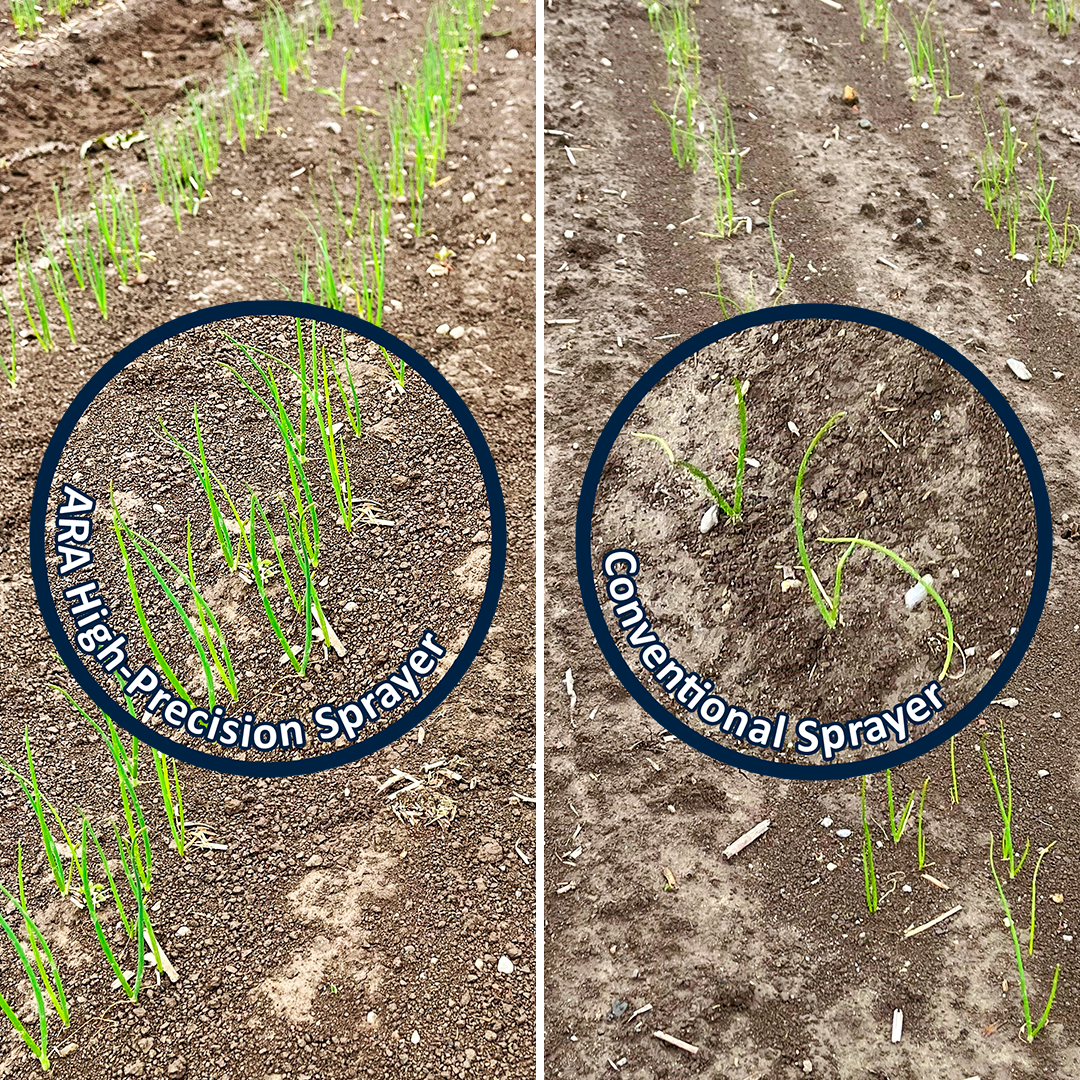
The team noted a clear growth defect on the onions sprayed with the conventional sprayer, the onions are considerably smaller than the onions in the plots treated with ARA. Overall crop health with the ARA sprayer seems much higher than with the conventional spraying method, even when increasing the dosages of the herbicides used.
Further testing will be completed, and conclusive results are to be published towards the end of the season.
More articles about onions : > types-of-crops/onion/