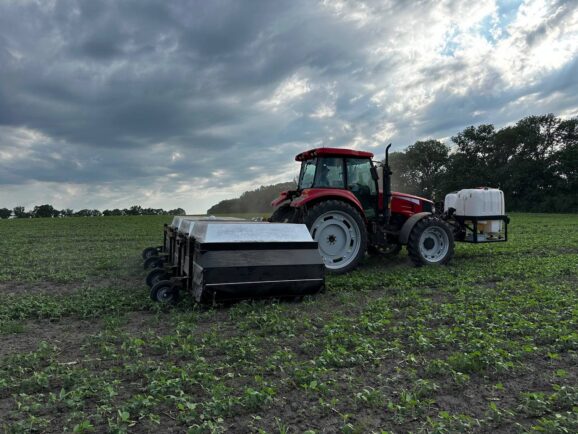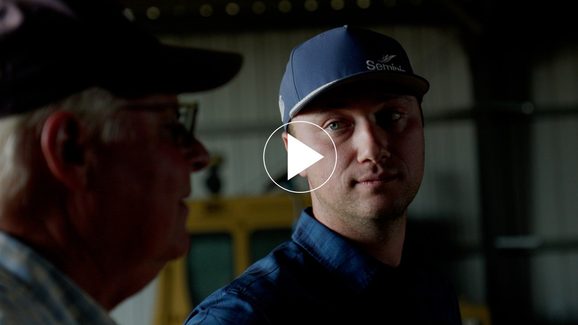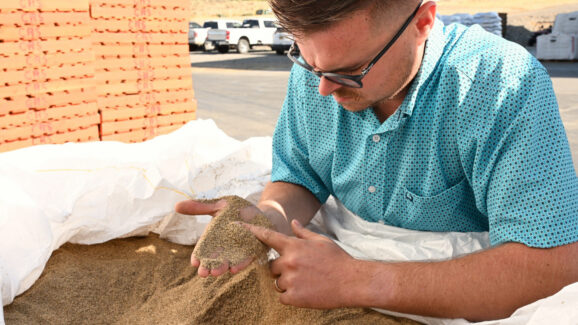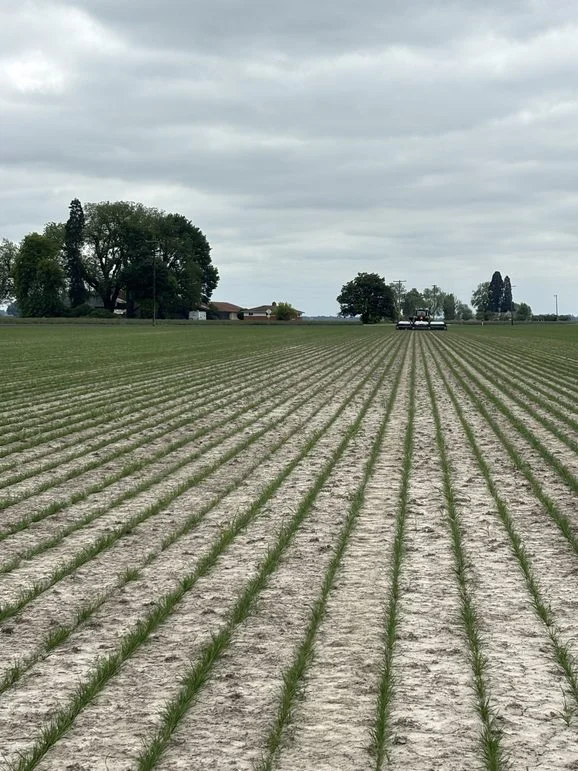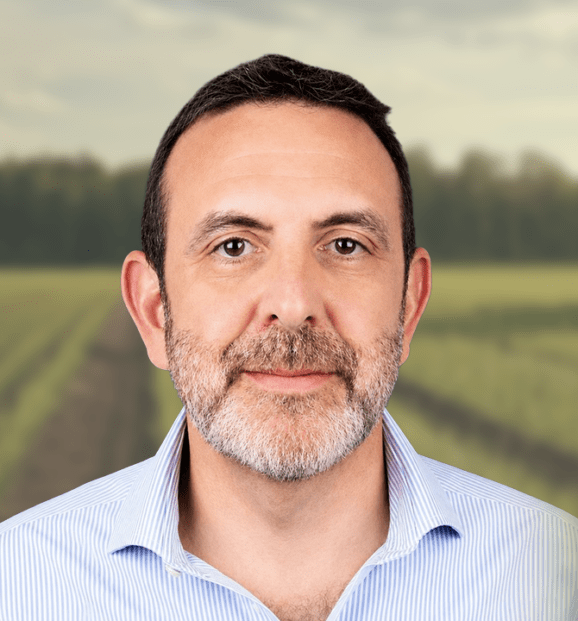


While traveling through the Haute-Savoie region of France, I took the opportunity to visit our client, Nathan Jacquet, owner and operator of ETA La Vallée des Usses. His company supports local farmers with a range of services, including precision spraying and manure spreading.
After understanding Northern France’s struggle with perennial weed infestations, where more than 50%1 of the farmers stated Rumex infestations, I became curious as to how Jacquet was getting along with his ARA™ sprayer on the Southeastern side of the country, as Rumex infestations were one of the main reasons why he purchased the machine.
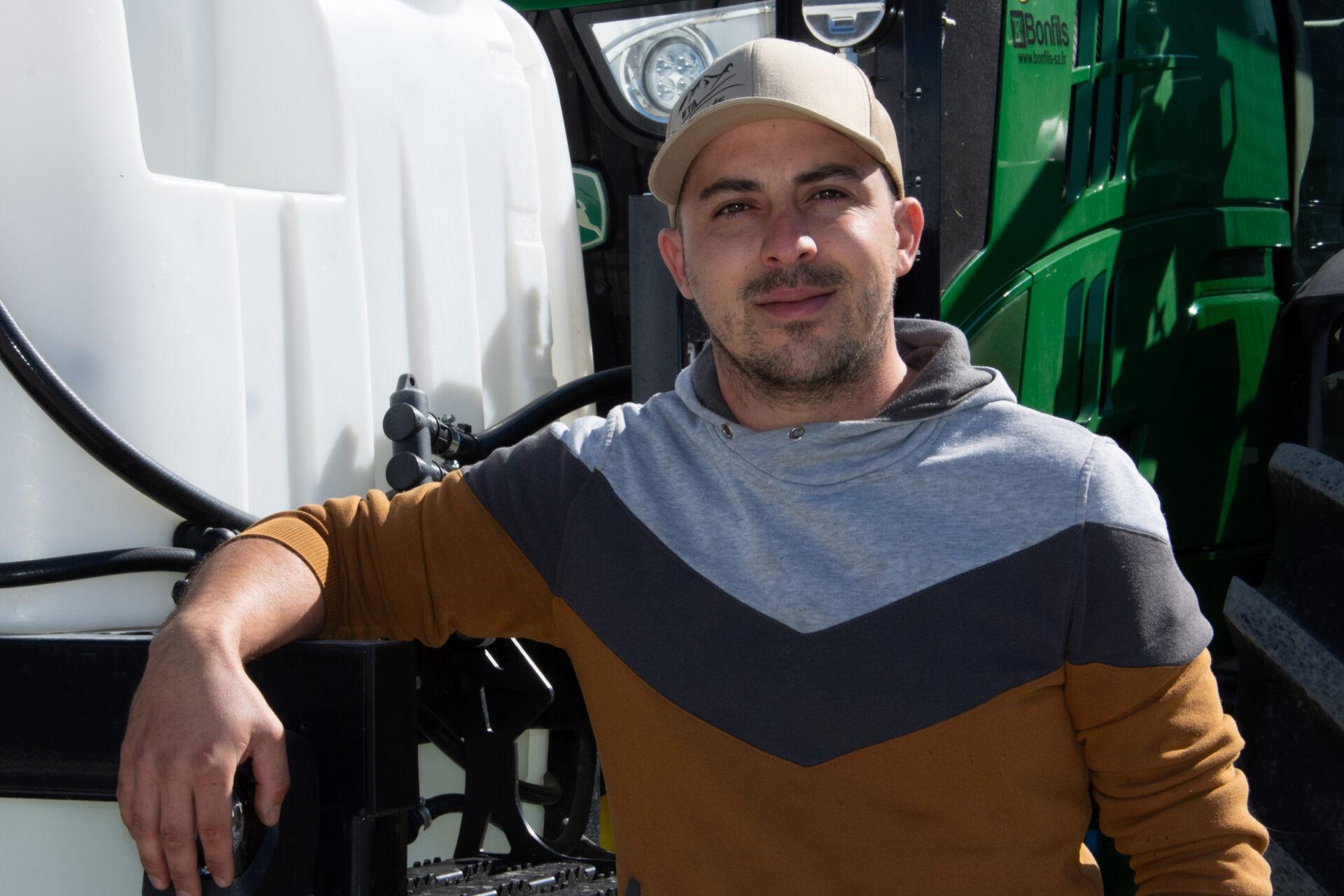
As I pull into the field, Jacquet is already unfolding the AI-powered sprayer. After a quick greeting, I ask Jacquet’s perspective on the impacts of Rumex in the alpine plains of Haute-Savoie.
“In our sector, where we produce forage for barn drying or baling, Rumex is problematic because it’s a fatty plant that is very hard to dry,” Jacquet said. “Eliminating it improves yield, forage quality, and drying efficiency.”
Rumex quickly takes over grasslands, with mature plants able to produce up to 60,000 seeds in a single year2. The plant’s tough tap roots make it difficult to remove and often overpower pastures, causing long term issues for farmers as it reduces quality and quantity of forage available for livestock.
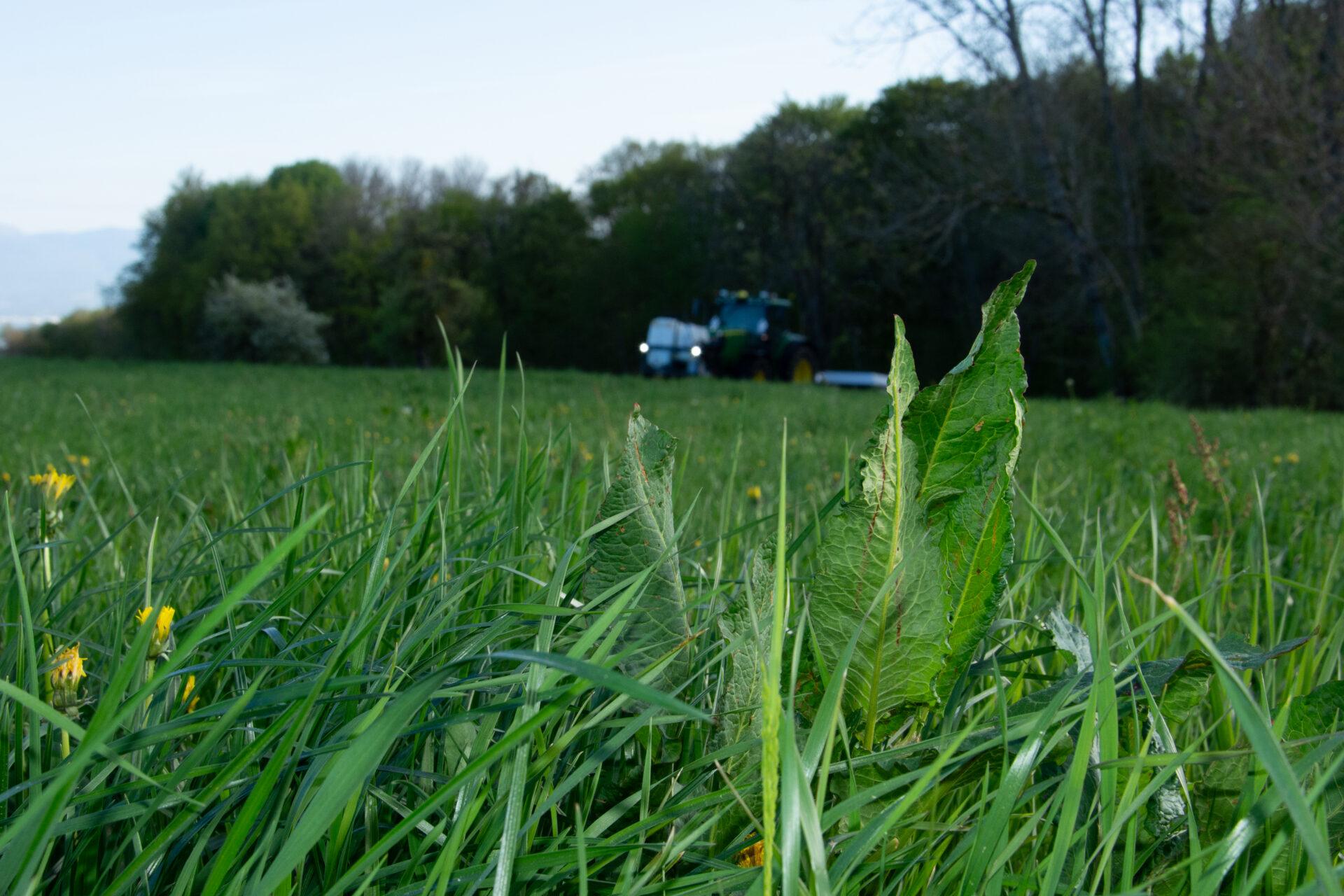
Because eliminating Rumex directly translates into higher yields and better-quality forage, some organic farmers in Switzerland devote more than 1,000 hours per year3 to manual weeding alone. In the fields of Haute-Savoie, managing Rumex is just as critical. Jacquet has seen his clients dedicate countless hours to manual weeding, resulting in long days only to end in frustration as many plants were missed. Some of his other clients used broadcast spraying, which damaged up to 75% of their harvest (says Jacquet).
As I watch the ARA’s wings set on the ground, I am reminded of when I first met Jacquet. He had invited several of his clients to a demonstration of the ARA organized by Ecorobotix and equipment dealer Stecomat. Because he wanted to make sure there was a real demand for something like the ARA, he had spent most of the time discussing with his clients.
When I ask whether his clients supported the decision, Jacquet says, “turns out they were waiting for someone to take the step and invest in this type of solution for the Rumex problem.”
Over the course of treating 1,000 hectares with the ARA, Jacquet has seen firsthand the benefits of its 6 × 6 cm spray precision. By targeting only Rumex plants and avoiding unnecessary herbicide application, he has cut chemical use by up to 80–90% while helping his clients achieve 10–30% more usable forage yield (says Jacquet).
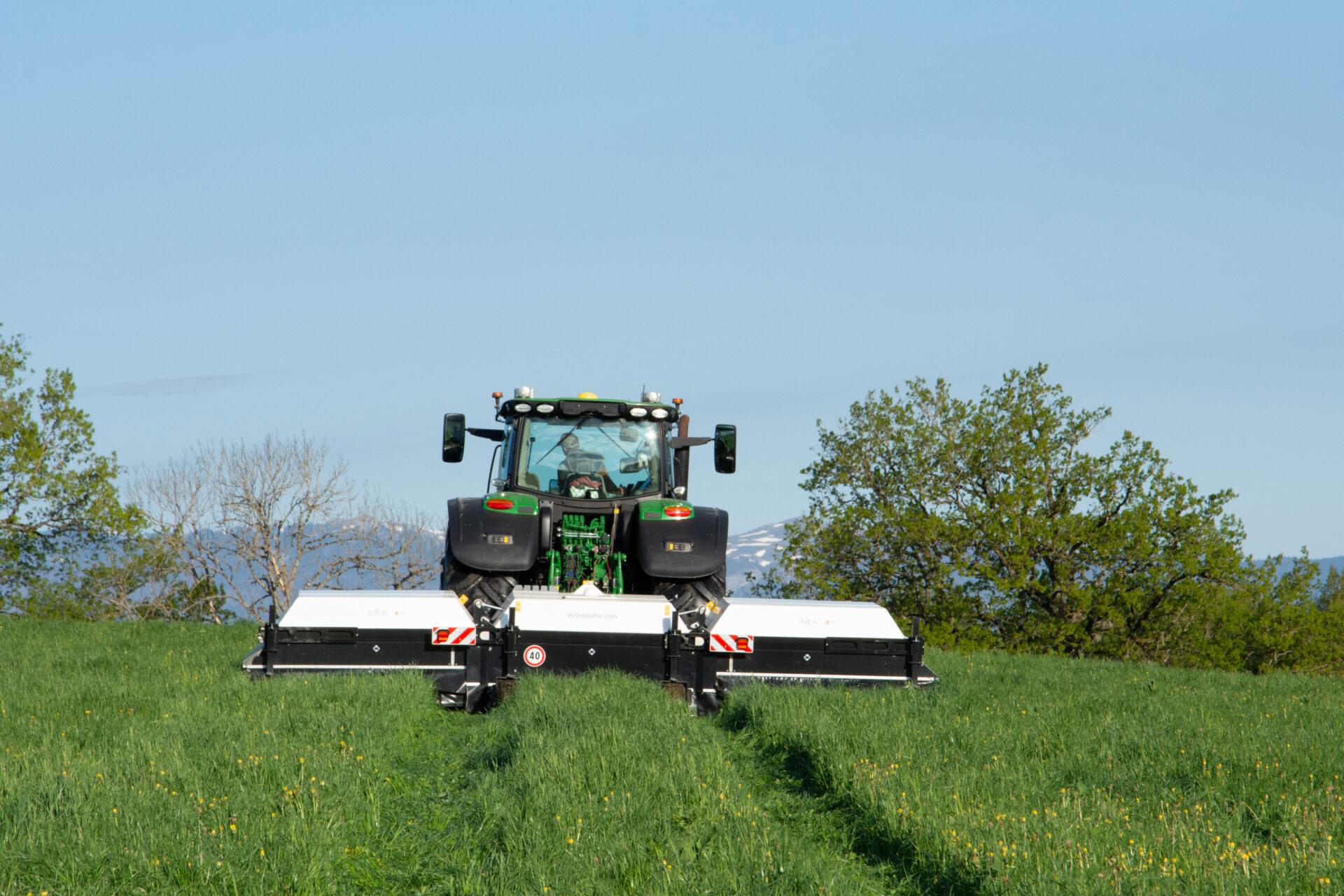
In comparison to how his clients treated Rumex infestations before, the ARA’s ability is almost unbelievable. As I am discussing this with Jacquet, he points out “Until you’ve seen it, you simply cannot believe that an agricultural machine can achieve such exceptional precision today.”
He then shows me the tablet that controls the machine. In just three clicks, he selects the weed to target, chooses which treatment to use, and adjusts the weed pressure depending on the field’s condition. Despite the simplicity of the system and overall support when he first purchased the machine, he admits that some clients are initially hesitant about the technology.
"Clients are often skeptical at first,” Jacquet says. “After seeing the machine in action, they call back saying they are amazed by the quality of work and precision.”
Jacquet’s clients can see a difference with the ARA after just one pass. However, for him, the real advantage builds as he uses the ARA on repeat fields. With each follow-up call, he’s able to compare records from previous applications with Ecorobotix's mapping and app.
Jacquet shows me the app and clicks on a field he has treated. He points to the areas of the field where the ARA spot sprayed and explains that, eventually, he will be able to see where regrowth appears and how weed pressure changes from one season to the next. Over time, he can focus more on problem areas and adapt to the specific conditions of each field, offering a personalized weed management approach for each of his clients.

As my visit nears its end and I gather my things, I know Jacquet’s testimony has convinced me of the ARA’s effectiveness, so I ask him my final question.
“Who would I recommend this machine to? Honestly, to myself,” he says with a laugh. “Given business growth, we’re already considering investing in a second machine.”
As I start my drive home and pass the fields of forage where Jacquet runs the ARA, I think about the transformation in weed control the machine brings to this area of Haute-Savoie. By decreasing chemical use and manual labor and only targeting Rumex plants, Jacquet's clients can choose an option that protects their soil, water quality, and environment and not compromise on effectiveness or the health of their crops.
References:
- Andert et al., “How Farmers Perceive Perennial Weeds in Northern France and Eastern Germany.” ↩︎
- Klötzli et al., “Key Management Practices to Reduce the Risk of the Occurrence of Rumex Obtusifolius in Productive Grasslands.” ↩︎
- Hatcher et al., “Biological Control of Rumex Species in Europe: Opportunities and Constraints.” ↩︎